
Where is the Best Place to Tattoo a Woman's Arm? A Guide to Perfect Placement
- Leonardo Pereira
- Nov 5, 2024
- 20 min read
Updated: Nov 23, 2025
Okay, let's have some real talk about something I know you've been stressing over: where exactly should you get that tattoo on your arm? You've finally decided on the design (or at least you're close!), you've found an artist you love, but now you're lying awake at night thinking: "Inner arm or outer arm? Wrist or forearm? Upper arm where I can hide it, or somewhere visible where I'll see it every day?"
Girl, I feel you. Choosing the best place to tattoo a woman's arm is actually way more complicated than it seems. It's not just about "what looks cute"—though that obviously matters! You're also thinking about: Will this hurt like hell? Can I cover it for work? Will it stretch weird when I'm older? Is this too visible for my conservative family? Will I actually SEE it and enjoy it? Does this placement look feminine or masculine? Is this basic or unique?
Here's the thing: there's no universally "best" placement—but there's definitely a best placement FOR YOU based on your lifestyle, pain tolerance, aesthetic preferences, career, and personal style. And that's exactly what we're going to figure out together.
Whether you're considering a delicate wrist tattoo, a meaningful quote on your inner forearm, a floral half sleeve, a small symbol on your upper arm, or going bold with a full sleeve, this guide will break down every option with brutal honesty about pain levels, visibility, aging, professional implications, and aesthetic considerations specific to women.
We'll explore the most popular placements (and why they're popular), discuss the pros and cons of each area, share real insights about pain (because let's be honest, that matters!), address how different placements age on female arms, consider professional visibility concerns, and answer every question you've been Googling at 2 AM.
Ready to find YOUR perfect arm placement? Let's dive in! 💪✨
Table of Contents
Understanding Arm Anatomy for Tattoos
Before we talk specific placements, let's break down the arm into zones:
The Major Arm Sections
1. Upper Arm (Shoulder to Elbow):
Outer upper arm (visible when wearing short sleeves)
Inner upper arm / inner bicep (more private)
Shoulder cap (where sleeve meets shoulder)
Back of upper arm (tricep area)
2. Forearm (Elbow to Wrist):
Inner forearm (faces you when palm up)
Outer forearm (faces others when arms at sides)
Side of forearm (edge between inner and outer)
3. Wrist:
Inner wrist (where you'd check pulse)
Outer wrist (top of wrist)
Side of wrist (edge)
4. Elbow/Ditch:
Front of elbow (elbow crease/"ditch")
Back of elbow (point)
Factors That Affect Placement Choice
Skin quality:
Forearms: generally smooth, flat, good skin
Upper arms: rounder, curves more
Wrists: thin skin, visible veins/tendons
Muscle/fat distribution:
Upper arms: more cushion = less pain generally
Forearms: closer to bone = more sensation
Wrists: very bony = more painful
Visibility:
Forearms: highly visible
Upper arms: easily covered with short sleeves
Wrists: visible unless wearing long sleeves
Aging considerations:
Upper arms: can be affected by weight fluctuations
Forearms: relatively stable
Wrists: very stable placement
Inner Forearm: The Most Popular Choice

Location: The inside of your arm from wrist to elbow crease
Why It's SO Popular (Especially with Women)
You see it constantly: This is THE biggest reason women love inner forearm tattoos—you can actually look at your own tattoo easily and often. When you're working at your computer, checking your phone, or just going about your day, your inner forearm faces you. This makes it perfect for meaningful tattoos, quotes, reminders, or designs you want to connect with daily.
Highly visible but coverable: Inner forearm shows when you're wearing short sleeves or have your arms in natural positions, but you can cover it with a cardigan, blazer, or long sleeves for professional settings.
Good canvas for vertical designs: The inner forearm provides a nice vertical space (about 8-10 inches from wrist to elbow), perfect for:
Vertical quotes or phrases
Stems of flowers running up the arm
Arrows, feathers, or elongated designs
Stacked symbols or elements
Relatively less painful: While not pain-free, the inner forearm has less nerve density than areas like the wrist or inner bicep, making it more tolerable for most people.
Feminine aesthetic: There's something delicate and feminine about inner forearm tattoos—they feel personal and intimate rather than aggressive or "in your face."
Best Designs for Inner Forearm
Text/quotes: Running vertically or horizontally
"Nevertheless, she persisted"
Coordinates of meaningful location
Dates in Roman numerals
Song lyrics or poetry lines
Botanical designs:
Rose stem with single bloom
Lavender sprigs
Wildflower bunches
Leaf branches
Minimalist symbols:
Moon phases
Small animals (deer, birds, butterflies)
Geometric patterns
Constellation maps
Portraits: Smaller scale (faces of loved ones, pets)
Pros of Inner Forearm
✅ You see it all the time (constant connection)✅ Relatively moderate pain (4-6/10)✅ Easy to show or cover✅ Good size canvas (can fit substantial designs)✅ Flat surface (good for detail)✅ Ages well (stable skin, less affected by weight changes)✅ Highly photographable (popular for tattoo photos)
Cons of Inner Forearm
❌ Very visible in short sleeves (professional consideration)❌ More sensitive than outer forearm (closer to nerves)❌ Elbow ditch area can be quite painful❌ Sun exposure (requires SPF diligence)❌ Can be seen as "trendy" (extremely popular placement)❌ May show fine lines/wrinkles with aging (though less than hands)
Pain Level: 5-6/10
Mid-forearm: Moderate (4-5/10)—mostly manageableNear wrist: More painful (6-7/10)—thinner skin, closer to boneNear elbow ditch: Most painful inner arm spot (7-8/10)—tender area
Professional Visibility
Moderate to high visibility
Visible in: short sleeves, 3/4 sleeves, rolled sleeves, casual wear
Coverable with: long sleeves, cardigans, blazers
Consider: Conservative workplaces may require constant covering
Size Recommendations
Small: 2-4 inches (symbols, small quotes)Medium: 4-7 inches (most popular—quotes, medium flowers)Large: 7-10 inches (substantial designs, near-sleeve coverage)
Outer Forearm: Bold and Visible

Location: The outside of your arm from wrist to elbow
Why Women Choose Outer Forearm
Maximum visibility: Unlike inner forearm that faces you, outer forearm faces THE WORLD. When your arms hang naturally at your sides, this is what everyone else sees. Perfect if you want your tattoo to be a public statement rather than a private reminder.
Bold aesthetic: Outer forearm tattoos read as more confident, bold, and extroverted than inner arm placements. They say "I want the world to see this."
Less painful than inner forearm: The outer forearm has thicker skin and fewer nerve endings, making it generally more tolerable.
Great for wraparound designs: You can do designs that wrap from outer to inner forearm, creating a 3D effect as your arm moves.
Best Designs for Outer Forearm
Horizontal bands:
Decorative armbands
Floral crowns wrapping around
Geometric patterns
Tribal/Polynesian bands
Nature scenes:
Mountain ranges (wrap around arm)
Forest landscapes
Ocean waves
Sunset/sunrise scenes
Animals:
Snakes wrapping around arm
Lions, wolves, foxes
Birds in flight
Sea creatures
Bold graphics:
Mandalas
Traditional tattoos (roses, daggers)
Geometric designs
Abstract art
Pros of Outer Forearm
✅ Less painful than inner forearm (3-5/10)✅ Highly visible to others (statement piece)✅ Good for wraparound designs✅ Thicker skin (better for bold designs)✅ Flatter surface on top (outer) side✅ Ages very well (stable placement)✅ Professional but visible (shows strength)
Cons of Outer Forearm
❌ You don't see it as often yourself❌ Extremely visible (hard to hide in short sleeves)❌ High sun exposure (top of arm gets most sun)❌ May read as more "masculine" depending on design❌ Professional concerns (very visible)
Pain Level: 3-5/10
Top/outer: Less painful (3-4/10)—thicker skin, meaty areaSide/edge: Moderate (4-5/10)Near elbow: Slightly more (5-6/10)
Professional Visibility
Very high visibility
Visible in: ALL short sleeve situations
Coverable with: long sleeves only
Consider: Very difficult to hide casually
Wrist: Delicate and Feminine
Location: The actual wrist area (about 2-3 inches above hand)
Why Wrist Tattoos Are Beloved (Despite the Pain)
Maximum femininity: Wrist tattoos are seen as delicate, dainty, and feminine—almost like permanent jewelry. They're subtle yet visible, making them hugely popular for first tattoos.
Highly visible to you: Like inner forearm, you see your wrist tattoos constantly—when typing, driving, checking your phone, or just looking down.
Small commitment: Perfect for tiny, meaningful symbols or short words/phrases. Great first tattoo size.
Bracelet aesthetic: Wraparound wrist tattoos look like permanent bracelets, creating a jewelry-like effect.
Best Designs for Wrist
Symbols:
Hearts, stars, crosses
Infinity symbols
Anchors, arrows
Small flowers (rose, lotus)
Minimalist animals
Words:
Single words (strength, love, faith)
Short phrases (3-5 words max)
Initials
Roman numeral dates
Wraparound:
Floral bracelets
Geometric bands
Delicate chain designs
Vine/leaf patterns
Pros of Wrist
✅ Extremely feminine and delicate aesthetic✅ You see it constantly✅ Perfect for small, meaningful tattoos✅ Can be covered with watch or bracelets✅ Relatively quick tattoo session (30 min - 1 hour typically)✅ Great conversation starter✅ Very photographable (social media friendly)
Cons of Wrist
❌ PAINFUL (6-8/10)—thin skin over bone❌ Very visible (hard to hide except with long sleeves)❌ Limited space (small designs only)❌ Fades faster (hands wash, sun exposure, friction)❌ Professional concerns (visible even when shaking hands)❌ Veins/tendons visible (can affect design placement)❌ Can be seen as "basic" (extremely common placement)
Pain Level: 6-8/10
Inner wrist: Very painful (7-8/10)—thin skin, veins, tendons, pulse pointOuter wrist: Painful (6-7/10)—still bonySide wrist: Moderately painful (6/10)
Reality check: Most people say wrist tattoos hurt significantly more than they expected. The pain is sharp and intense because you're basically tattooing directly on bone with minimal cushion.
Professional Visibility
Extremely high visibility
Visible: virtually always (shaking hands, holding pen, typing)
Coverable: only with long sleeves + bracelets/watch
Consider: One of hardest placements to hide
Size Recommendations
Tiny: 0.5-1 inch (single symbol)Small: 1-2 inches (small flower, word)Medium: 2-3 inches (phrase, wraparound)Larger designs: Consider moving up to forearm instead
Upper Arm/Shoulder: Versatile and Easy to Hide

Location: From shoulder to elbow, outer side
Why Upper Arm is THE Best for Professional Women
Easiest to hide: Upper arm tattoos are completely invisible in short sleeves (regular T-shirt sleeves cover them). This makes them ideal for women in conservative professions or with traditional families.
Larger canvas: The upper arm provides more space than forearm, allowing for bigger, more detailed designs without committing to a full sleeve.
Less painful: Upper arm has more muscle and fat, making it one of the least painful arm placements (3-5/10).
Private but still visible: You can choose when to reveal it (tank tops, swimwear, sleeveless dresses) versus keeping it hidden (work, formal events, family gatherings).
Best Designs for Upper Arm
Flowers:
Roses, peonies, lotus
Floral bouquets
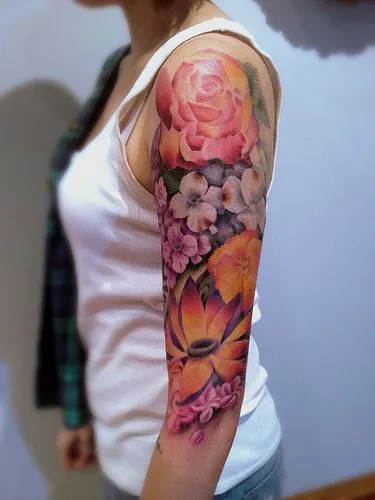
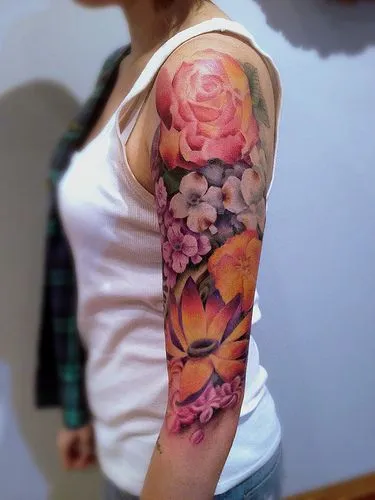
Shoulder cap flowers extending down
Mandalas:
Circular designs work beautifully on shoulder roundness
Can extend down arm toward elbow
Animals:
Lions, wolves, owls
Birds (phoenix, hummingbird)
Butterflies
Portraits:
Loved ones, pets
More private placement for personal images
Quotes:
Wrapped around arm
Running down outer arm
Pros of Upper Arm
✅ Easiest to hide (invisible in regular short sleeves)✅ Least painful arm area (3-5/10)✅ Larger canvas (more design options)✅ Natural curve suits certain designs (florals, mandalas)✅ Private and intimate✅ Ages well (less sun exposure)✅ Professional-friendly✅ Can extend to shoulder, back, or sleeve if desired
Cons of Upper Arm
❌ You rarely see it yourself❌ Rounder surface (not as flat as forearm)❌ Can be affected by weight changes (arm gets thinner/thicker)❌ Less visible to show off (some people want visibility)❌ May require larger design to look proportional
Pain Level: 3-5/10
Outer upper arm: Least painful (3-4/10)—meaty, muscularInner upper arm (bicep): Slightly more (4-5/10)—thinner skinShoulder cap: Moderate (4-5/10)Back of upper arm: Moderate (4-5/10)
Professional Visibility
Low to none
Visible: tank tops, sleeveless, swimwear, strapless dresses
Hidden: T-shirts, button-ups, all professional attire
Perfect for: Conservative careers, traditional families
Size Recommendations
Small: 3-5 inches (visible but not dominant)Medium: 5-8 inches (most popular—substantial but contained)Large: 8-12 inches (approaching half sleeve)
Inner Bicep: Intimate and Unique
Location: Inside of upper arm, from armpit to elbow
Why Inner Bicep is the "Secret" Placement
Most private arm placement: Inner bicep tattoos are hidden unless you lift your arm—they're not visible in normal arm positions. This creates an intimate, secret quality.
Unique choice: While inner forearm is trendy and wrist is common, inner bicep is relatively uncommon, making it a more original choice.
Sensual placement: There's something inherently intimate about inner arm tattoos—they're close to your body, in a soft, vulnerable area.
Best Designs for Inner Bicep
Meaningful quotes:
Personal mantras
Quotes you want private
Reminders meant for you only
Delicate florals:
Roses, wildflowers
Botanical illustrations
Intimate symbols:
Coordinates
Dates
Small meaningful icons
Portraits:
Very personal images
Loved ones in private placement
Pros of Inner Bicep
✅ Most private arm placement✅ Unique and uncommon✅ Intimate and personal✅ Hidden in professional settings automatically✅ Soft, feminine placement✅ Can see it when you want (lift arm)✅ Ages reasonably well
Cons of Inner Bicep
❌ PAINFUL (6-8/10)—thin skin, sensitive area❌ You rarely see it (arm hangs naturally)❌ Awkward positioning during tattooing❌ Can be affected by arm shape changes❌ Armpit proximity (very sensitive near there)❌ Limited visibility to enjoy it
Pain Level: 6-8/10
Mid inner bicep: Painful (6-7/10)—thin skin, sensitiveNear armpit: Very painful (7-9/10)—extremely sensitive areaLower inner bicep: Moderately painful (5-6/10)
Reality check: Inner bicep is one of the more painful arm areas. The skin is thin, sensitive, and close to the armpit (which is very tender).
Professional Visibility
Virtually zero
Visible: only when deliberately lifting arm, reaching up
Hidden: all normal positions and clothing
Perfect for: Maximum privacy
Full Sleeve vs. Half Sleeve Considerations

Half Sleeve (Forearm Only)
Coverage: Wrist to elbow
Why women choose it:
Visible and bold but contained
Doesn't require upper arm commitment
Can still wear short sleeves at work (if workplace allows forearm tattoos)
Shorter time commitment (10-20 hours typically)
More affordable ($1,000-$3,000 vs. $2,500-$6,000+)
Popular styles:
Floral designs wrapping around
Botanical sleeves (leaves, flowers, vines)
Watercolor elements
Geometric patterns
Half Sleeve (Upper Arm Only)
Coverage: Shoulder to elbow
Why women choose it:
Easy to hide completely
Larger canvas for detailed work
Professional-friendly
More private and intimate
3/4 Sleeve
Coverage: Shoulder to mid-forearm or wrist
The compromise:
More coverage than half sleeve
Less commitment than full sleeve
Can still partially hide (upper portion covered by short sleeves)
Full Sleeve
Coverage: Shoulder to wrist
Why women choose it:
Complete artistic statement
Bold and confident
Cohesive design flowing entire arm
Maximum canvas for storytelling
Reality check for women:
Major commitment: 25-50 hours, $3,000-$10,000+, 6-18 months
Highly visible: Cannot hide without long sleeves
Professional implications: May limit career options in conservative fields
Social reactions: Be prepared for attention, opinions, questions
Family concerns: Conservative families may disapprove
Questions to ask yourself before committing:
Can my career accommodate this visibility?
Am I prepared for constant attention/questions?
Do I have the budget ($3,000-$10,000+)?
Can I commit to 6-18 months of regular sessions?
Am I comfortable potentially limiting future career flexibility?
How will my family react (if that matters to me)?
Pain Levels: What to Expect on Different Arm Areas
Let's be brutally honest about pain:
Least Painful (3-5/10)
Outer upper arm: Meaty, muscular, cushionedShoulder cap: Good muscle coverageOuter forearm (top): Thicker skin, less nerve density
What it feels like: Scratching, annoying but tolerable, like a cat scratch
Moderate Pain (5-6/10)
Inner forearm (mid-section): Some nerve endings, thinner skinBack of upper arm: Decent cushion but thinner skinOuter forearm (sides): Closer to bone on edges
What it feels like: Stinging, burning sensation, uncomfortable but manageable
Painful (6-8/10)
Wrist (inner and outer): Thin skin directly on bone, pulse pointInner bicep: Thin sensitive skin, armpit proximityElbow ditch: Tender skin, constant movement areaNear armpit: Extremely sensitive, lymph nodes
What it feels like: Sharp, intense pain, difficult to sit through long sessions
Factors That Affect YOUR Pain Experience
Personal pain tolerance:
Everyone's different
Previous tattoo experience helps
Some people find wrist tolerable; others can't handle it
Time of day:
Morning = higher tolerance typically
Evening = more tired, lower tolerance
Menstrual cycle (for women):
Week before period = heightened pain sensitivity
Mid-cycle = lowest sensitivity
Tip: Schedule around your cycle!
Artist's technique:
Light-handed artists = less painful
Heavy-handed = more painful
Experience matters
Session length:
First hour = most tolerable
After 2 hours = pain increases significantly
After 4 hours = exhausting for most
Pain Management Tips
Before:
Get good sleep
Eat substantial meal 1-2 hours before
Stay hydrated
Avoid alcohol (thins blood)
Avoid caffeine if you're jittery (can increase bleeding)
Don't take aspirin or ibuprofen (blood thinners)
During:
Breathe deeply and steadily
Bring music/podcast distraction
Take breaks when needed (don't be tough—speak up!)
Bring snacks and water
Focus on breathing, not the needle
After:
Eat something (blood sugar drops)
Hydrate
Rest if feeling exhausted
Take acetaminophen if needed (not aspirin/ibuprofen)
Professional Considerations and Visibility






Real talk about tattoos and careers:
Conservative Professions
Fields with stricter tattoo policies:
Law (lawyers, judges, paralegals)
Finance (banking, investment, financial advising)
Healthcare (varies—some hospitals have policies)
Education (especially elementary—varies by district)
Government/politics
Corporate management
Customer-facing luxury retail
Best placements for these careers:
Upper arm (invisible in all professional attire)
Inner bicep (maximum privacy)
Avoid: forearm, wrist, hands, any visible placement
Moderate Professions
More flexibility but still considerations:
Tech (generally very accepting)
Creative fields (design, marketing, advertising)
Hospitality (varies by establishment)
Retail (depends on brand)
Healthcare (many facilities now accept visible tattoos)
Workable placements:
Forearm (if small/tasteful, often acceptable)
Upper arm (easily hidden when needed)
Wrist (can cover with watch, bracelets if needed)
Tattoo-Friendly Professions
Fields with high acceptance:
Tattoo industry (obviously!)
Arts and entertainment
Music industry
Fashion (especially alternative/streetwear)
Salon/beauty industry
Entrepreneurship (you make the rules!)
Many tech companies
Nonprofits (often accepting)
Any placement works
Questions to Ask Yourself
Current job:
Does your handbook mention tattoo policies?
Are visible tattoos common in your office?
Have you seen coworkers with visible arm tattoos?
Could you ask HR discretely?
Future career:
What are your 5-10 year career goals?
Do those fields typically accept visible tattoos?
Are you willing to limit certain career paths?
Would you regret closing doors?
Practical solutions:
If you need flexibility: Get upper arm tattoos (easily hidden)
If you want visibility: Confirm your career path accepts it first
If you're unsure: Start small and hidden, add visibility later
If you don't care: Full sleeve and find tattoo-friendly employers!
How Arm Tattoos Age on Women
Let's address aging concerns honestly:
Factors That Affect Aging
Sun exposure (THE BIGGEST FACTOR):
Arms get significant sun (driving, outside, summer)
UV breaks down ink faster than anything
Forearms especially vulnerable (always exposed)
Solution: SPF 50+ daily, reapply every 2 hours in sun
Skin elasticity changes:
All skin loses elasticity with age
Arms generally age better than hands/feet
Upper arms can be affected by weight changes
Weight fluctuations:
Gaining/losing 30+ pounds can stretch/compress tattoos
Upper arms more affected than forearms
Forearms very stable
Ink quality and application:
Properly applied tattoos age better
Quality ink matters
Bold designs age better than fine lines
How Different Placements Age
Forearms (Inner and Outer):
Age very well overall
Relatively stable skin
Less affected by weight changes
Main concern: sun exposure (requires diligence)
Fine lines may blur slightly over 20+ years
Wrists:
Age well IF protected from sun
Stable placement (bone structure doesn't change)
Concern: hands show age first (some wrinkling/texture changes over 50+)
Small tattoos hold up if bold enough
Upper Arms:
Age well with stable weight
Can be affected by significant weight changes
Less sun exposure (ages better color-wise)
May see some changes with loose skin after 50+ (normal aging)
Inner Bicep:
Ages reasonably well
Can be affected by arm shape changes
Less sun exposure helps
Thinner skin may show aging more
Styles That Age Best
Traditional/Bold:
Thick outlines (3mm+)
Solid colors
High contrast
Ages beautifully (timeless look)
Black and grey:
Fades to attractive silver/grey
Maintains depth
Ages gracefully
Simple/Minimalist (if bold enough):
Clean lines (not ultra-fine)
Minimal detail
Works well if lines are substantial
Styles That Age More Challenging
Ultra-fine line:
Lines blur together over 10-20 years
Details become muddied
May need touch-ups
Watercolor without outlines:
Colors blend together
Lack of definition
Can look muddy after 15+ years
White ink:
Yellows over time
Becomes nearly invisible
Not recommended as standalone
Touch-Ups and Maintenance
Reality check: All tattoos benefit from touch-ups eventually
Typical timeline:
5-10 years: May need minor touch-ups (especially colored pieces)
10-20 years: Colors refreshed, lines re-defined
20+ years: More significant refresh possible
Cost: Usually $100-$300 for minor touch-ups
Verdict: With proper care (SPF!), arm tattoos age very well on women. Choose bold designs, protect from sun, maintain stable weight, and expect some natural mellowing over decades—which often adds character rather than detracting!
Frequently Asked Questions (FAQ)
What is the best place to tattoo a woman's arm?
The "best" placement depends on your priorities: For maximum personal visibility and meaningful daily connection, inner forearm is ideal (you see it constantly, moderate pain 5-6/10, easy to show/hide). For professional discretion while having a substantial tattoo, upper arm/shoulder is best (invisible in regular short sleeves, least painful 3-5/10, large canvas). For bold public statement, outer forearm works (highly visible to others, less painful 3-5/10). For delicate first tattoo, wrist is popular despite pain (extremely feminine, tiny commitment, but painful 6-8/10). Consider: pain tolerance, career visibility needs, whether you want to see it daily, size of design, and professional requirements.
What is the least painful place to get a tattoo on your arm?
Outer upper arm is the least painful arm placement (3-4/10 pain level) because it has the most muscle and fat cushioning, thicker skin, and fewer nerve endings. The shoulder cap and outer forearm (top) are also relatively tolerable (4-5/10). Conversely, the most painful arm placements are inner wrist (7-8/10), near armpit (7-9/10), inner bicep (6-8/10), and elbow ditch (7-8/10) due to thin skin directly over bone, high nerve density, or proximity to sensitive areas. If pain is your primary concern, avoid wrist, inner bicep, and elbow areas—stick to outer upper arm or outer forearm.
Where should I get my first tattoo on my arm?
For first arm tattoo, consider: Wrist (very popular despite pain—small commitment, delicate, feminine, but 6-8/10 pain), inner forearm (you see it daily, meaningful placement, moderate 5-6/10 pain, good size options), or upper arm (easiest to hide, least painful 3-5/10, private, great for testing your tattoo feelings). Best beginner choice: Upper arm IF you want to test having a tattoo before committing to visibility, or inner forearm IF you want daily connection and don't mind visibility. Start small (2-4 inches) to test pain tolerance and see how you feel living with visible ink before committing to larger pieces or sleeves.
Do arm tattoos hurt more on women?
Pain tolerance is highly individual, not gender-based, but some factors differ: women often have higher pain thresholds (childbirth, menstrual cramps condition pain tolerance), but also have more sensitivity fluctuations due to menstrual cycles (pain sensitivity increases week before period, decreases mid-cycle). Women typically have less arm muscle mass than men, potentially meaning slightly less cushioning on upper arms, but this varies greatly by individual fitness. The pain level for specific arm placements (wrist 6-8/10, inner forearm 5-6/10, outer upper arm 3-5/10) is the same regardless of gender. Tip for women: Schedule tattoos mid-cycle (between periods) for lowest pain sensitivity—avoid the week before your period!
How do I hide an arm tattoo for work?
Hiding options by placement: Upper arm tattoos are easiest—completely invisible in all short-sleeved shirts, button-ups, and professional attire (only visible in tank tops or sleeveless). Forearm tattoos require long sleeves, cardigans, blazers, or 3/4 sleeve shirts. Wrist tattoos need long sleeves PLUS watches, bracelets, or wide cuff accessories. Full sleeves require long sleeves always (button-ups, blazers, sweaters). Makeup solutions: High-coverage tattoo concealer (Dermablend, Kat Von D) for small areas, but impractical for large tattoos and can transfer onto clothing. Best approach: If professional visibility is a concern, choose upper arm placement from the start rather than trying to constantly cover visible tattoos.
Will my arm tattoo stretch if I gain weight?
Forearm tattoos are very stable and won't significantly stretch with normal weight fluctuations (±20-30 lbs) because forearms have minimal fat and are primarily bone, tendon, and muscle. Upper arm tattoos can be affected by major weight changes (50+ lbs) because upper arms store more fat and muscle that expands/contracts. Gradual weight changes (normal life fluctuations) typically don't cause noticeable distortion. Pregnancy note: Arm tattoos are NOT affected by pregnancy (unlike stomach, breasts, hips)—arms remain stable. To minimize any potential issues: maintain relatively stable weight, choose forearm over upper arm if concerned, avoid getting tattoos during major weight loss/gain periods, and select designs where minor stretching won't destroy the image (avoid precise geometric patterns that require perfect proportions).
Can I get a sleeve tattoo if I'm a woman?
Absolutely yes! Full sleeves on women have become increasingly popular and accepted, representing confidence, commitment to art, and personal expression. Considerations specific to women: Professional implications may be more significant (some conservative fields still judge women's visible tattoos more harshly than men's—unfair but real), social reactions and family concerns (be prepared for unsolicited opinions), and commitment level (full sleeves cost $3,000-$10,000+, take 25-50 hours over 6-18 months, are highly visible). Popular women's sleeve styles: Floral designs with peonies, roses, cherry blossoms, botanical/nature themes, watercolor elements combined with black linework, and Japanese traditional (elegant and feminine). Many successful professional women have full sleeves—just ensure your career path accommodates visibility or that you're prepared to wear long sleeves constantly.
Should I get a tattoo on my dominant or non-dominant arm?
Most people choose dominant arm (right arm if right-handed) because you see it more naturally during daily activities (writing, eating, typing, using phone). However, consider: If you want maximum personal visibility, dominant arm faces you more. If you want others to see it more (outer forearm especially), either arm works equally. If you're building toward a sleeve, plan which arm will be sleeved. Some people intentionally choose non-dominant arm if they use dominant hand for work extensively (servers, hairstylists, healthcare workers—gives dominant arm a break). Common approach: Start with one arm, see how you feel, possibly add to the other later. There's no wrong choice—it's purely personal preference!
How much does a woman's arm tattoo cost?
Arm tattoo costs by size: Small wrist tattoo (1-2 inches) costs $80-$200, small to medium forearm (3-5 inches) costs $200-$500, medium forearm piece (5-8 inches) costs $400-$1,000, large forearm/upper arm (8-12 inches) costs $800-$2,000, half sleeve costs $1,200-$3,500, 3/4 sleeve costs $2,000-$5,000, and full sleeve costs $3,000-$10,000+. Factors affecting cost include: artist experience and location (major cities cost more), style complexity (watercolor and realism cost more), color vs. black and grey (color adds 20-30% typically), and detail level (intricate designs take longer). Most shops have minimums of $80-$150. Always prioritize quality over price—arm tattoos are highly visible and permanent!
At what age should a woman get an arm tattoo?
Legally, you must be 18+ (no exceptions in reputable shops). Best age considerations: Early 20s IF you're certain about placement visibility and career path, mid-to-late 20s is popular (more established career, clearer life direction, better financial stability), 30s+ is increasingly common (more life experience informs meaningful choices, established career knows tattoo policies, financial security allows quality work). There's no "too old"—many women get first tattoos in their 40s, 50s, even 60s+! Age considerations: ensure career path accommodates visibility, understand that tastes may evolve (choose timeless over trendy), and have realistic expectations about aging (all tattoos age, regardless of when you get them). Bottom line: The best age is when YOU'RE ready—when you've found meaningful design, can afford quality work, understand career implications, and feel confident in your choice
Final Thoughts
Okay, real talk: choosing where to put your arm tattoo is actually one of the most important decisions in the entire process—maybe even more important than the design itself (controversial opinion, I know!).
Here's why: you can always add to or modify a design. You can get touch-ups, incorporate new elements, even eventually cover something if you truly hate it. But placement? That's basically permanent. You can't move a wrist tattoo to your upper arm if you realize you hate seeing it every day. You can't hide a forearm tattoo when you suddenly need to interview for a conservative corporate job.
So before you book that appointment, take a moment to really think about:
Your lifestyle: Are you in a career with tattoo policies, or do you have the freedom? Do you interact with conservative clients or family members regularly? How much do others' opinions affect you?
Your aesthetic: Do you want to see your tattoo constantly (inner forearm, wrist) or are you happy with it being more private (upper arm, inner bicep)? Do you want a bold statement or subtle reminder?
Your pain tolerance: Be honest—can you handle 8/10 pain for wrist placement, or should you stick with the 4/10 comfort of upper arm?
Your future: Where do you see yourself in 5, 10, 20 years? Are you okay potentially limiting career flexibility? Planning kids (though arm tattoos aren't affected by pregnancy)? Anticipating weight changes?
And honestly? There's no wrong answer. I've seen gorgeous, meaningful tattoos in every single arm placement we discussed. The "best" place is the one that aligns with YOUR priorities, YOUR life, and YOUR vision for how you want to carry this art.
Some of you will read this and immediately know: "Inner forearm, 100%. I want to see this meaningful quote every single day." Others will think: "Upper arm for sure—I need the flexibility to hide it, and I don't want the visibility stress." Both are perfect choices for those specific people.
The worst thing you can do is choose a placement because it's "trendy" (yes, inner forearm, I'm looking at you) or because your friend has theirs there or because you saw a cute Instagram photo. This is YOUR body, YOUR art, YOUR life.
So take your time. Read through this guide again. Think about what matters most to you. Talk to your artist. And when you finally sit in that chair, you'll know you made the right choice—not because it's the "best" placement objectively, but because it's the perfect placement for YOU.
Now go get that beautiful ink, gorgeous. Your arm is about to become a masterpiece. 💪✨🎨
References
See More: ⤵
50 Beautiful Tattoo Ideas for Women: Designs, Placement, and Aftercare Tips
Shoulder tattoos for females: Your Complete Guide to Stunning Designs and Aftercare
Shoulder Tattoos for Men: A Comprehensive Guide for Your Ink
Price for a tattoo: Factors That Determine the Cost of Your Ink
Leg Tattoos for Women: Designs, Placement, Pain, and Aftercare
Tattoos for Stretch Marks: Transforming Scars into Beautiful Body Art
50 Cool Tattoo Ideas That Will Inspire Your Next Ink Adventure
Calavera Tattoo: Embracing the Beauty and Symbolism of Sugar Skulls
Wave Tattoo Ideas: Capturing the Beauty and Power of the Ocean
Compass Tattoo: Meanings, Designs, and Ideas for Your Next Ink Adventure
Cross Tattoos: Exploring the Meaning, Symbolism, and Designs
Snug Piercing: Everything You Need to Know Before Getting One
Flower Tattoo Ideas: 30 Stunning Floral Designs to Inspire Your Next Ink
Halloween Tattoos: Spooky and Creative Ideas for Ink Enthusiasts
Watercolor Tattoos: Embracing the Beauty and Artistry of Fluid Designs