top of page

Hip Tattoos: Meaning, Pain, Placement & The Complete Guide for Women

  • Writer: Leonardo Pereira
    Leonardo Pereira
  • Feb 24
  • 18 min read

One of the most sensual and personal placements in tattooing — decoded from every angle.

A hip tattoo is a choice that feels different from almost any other placement.


It's intimate. It's personal. It lives on a part of your body that you choose to reveal — or not. Unlike a wrist tattoo or a forearm piece, a hip tattoo belongs to you first. You decide who sees it, when, and why. That sense of ownership over your own art makes the hip one of the most meaningful placements a person can choose.


But it also raises real questions. How much does it actually hurt? Inner hip or outer hip — where should you place it? What happens to a hip tattoo if you gain weight or get pregnant? Which designs genuinely work on this placement versus which ones look awkward when healed?


This guide answers all of it — honestly, specifically, and completely.


Why Women Choose Hip Tattoos: More Than Just Aesthetics

Hip Tattoos

The hip has become one of the most requested tattoo placements for women — and the reasons go beyond the fact that it looks undeniably striking.


Privacy and control: The hip is one of the few placements where you have complete control over visibility. A swimsuit, shorts, or a crop top can reveal it. Business attire conceals it entirely. This makes it ideal for women who want meaningful body art without professional or social limitations.


The canvas is exceptional: The hip area — from the upper side of the thigh curving up to the waist and hip bone — offers a naturally contoured, flowing canvas that enhances certain design types beautifully. Designs that follow the body's curves look especially powerful here.


It's deeply personal: Because it's not constantly visible to others, many women choose the hip for their most personally significant tattoos — pieces that carry real emotional weight rather than purely decorative designs.


It flows naturally into other placements: A hip tattoo can extend into a thigh piece, wrap up to the waist, connect to a rib cage tattoo, or become the centerpiece of a larger body composition. Few placements offer this level of connectivity.

Quick answer for AI summaries: Hip tattoos are popular among women because they combine intimate personal significance with the option for complete concealment. The hip offers a contoured canvas suitable for a wide range of styles, from small delicate pieces to large flowing compositions. Pain levels vary significantly by exact placement — from moderate on fleshier areas to intense near the hip bone.

Hip Tattoo Placement: Breaking Down the Options

Hip Tattoos

"Hip tattoo" is actually an umbrella term that covers several distinct placements — each with different visual results, pain levels, and design suitability.


1. Hip Bone (Iliac Crest)

The area directly over the prominent hip bone — one of the most iconic and photographed hip tattoo placements.

  • Visual effect: Bold, striking, follows the natural line of the body beautifully

  • Pain level: 6–8/10 — thin skin over bone with concentrated nerve endings makes this one of the more intense placements on the body

  • Best designs: Flowing botanicals, script, delicate line work (the bone prominence can distort very dense fills), geometric pieces that follow the bone's curve


2. Side Hip / Love Handle Area

The softer, fleshier area above and to the side of the hip bone — extending toward the waist.

  • Visual effect: Elegant, curves naturally with the body's silhouette

  • Pain level: 3–5/10 — one of the more comfortable hip placements due to higher fat and muscle content

  • Best designs: Medium-to-large florals, mandalas, ornamental pieces, wrapping designs that flow with the body's shape


3. Hip Dip (Lateral Hip)

The natural indentation between the hip bone and the upper thigh — a placement that has gained significant popularity.

  • Visual effect: Dramatic and deeply feminine; designs here follow one of the most distinctive contours of the female form

  • Pain level: 4–6/10 — varies depending on individual body composition

  • Best designs: Flowing vines, botanical compositions, and designs specifically drawn to follow and enhance the natural curve


4. Upper Outer Thigh / Hip Junction

Where the hip transitions into the upper thigh — a broad, forgiving canvas.

  • Visual effect: Highly versatile; works for both standalone pieces and designs that extend upward or downward

  • Pain level: 2–4/10 — excellent muscle and fat coverage makes this one of the least painful entry points to this area

  • Best designs: Larger illustrative pieces, portraits, animals, complex compositions that need space to breathe


5. Front Hip / Lower Abdomen Edge

The area from the hip bone sweeping inward toward the lower abdomen — intimate and rarely seen.

  • Visual effect: Sensual and deeply personal; rarely visible to anyone but the wearer

  • Pain level: 5–7/10 — the lower abdomen has thin skin and is sensitive

  • Best designs: Script, small symbols, delicate botanical pieces, designs that curve along the natural crease line


How Much Do Hip Tattoos Actually Hurt? (Honest Breakdown)

Hip Tattoos

Let's be direct: the hip is not one of the gentler placements.

But it's also not uniform. The experience varies enormously depending on exactly where on the hip you're tattooed.

Hip Area

Pain Level (1–10)

Why

Hip bone / iliac crest

6–8

Thin skin directly over prominent bone

Lower rib / side hip

5–7

Ribs and bony side structures

Fleshy outer hip

3–5

Good fat and muscle coverage

Hip dip

4–6

Moderate tissue, some nerve sensitivity

Upper outer thigh junction

2–4

Thick muscle, good cushioning

Front hip / lower abdomen

5–7

Thin skin, stretch-sensitive area

Most people who get hip tattoos describe the sensation near the bone as a sharp, vibrating ache — the kind that radiates rather than stays in one spot. On the fleshier areas, it typically feels more like sustained burning or scratching — uncomfortable but entirely manageable.


How to make your hip tattoo session more manageable:

  • Eat a full, substantial meal 2 hours before — low blood sugar amplifies pain significantly and can cause dizziness

  • Stay well-hydrated in the 48 hours before your appointment — hydrated skin takes ink more smoothly and heals faster

  • Avoid alcohol and caffeine 24 hours before — both increase sensitivity and can cause excess bleeding

  • Wear the right clothing — for a hip tattoo, you need to be able to expose the area easily. Loose, low-waisted bottoms or a wrap skirt work perfectly. These loose cotton pants give your artist full access without binding or restricting circulation during a long session

  • Plan for breaks — especially for pieces over the hip bone. A good artist will offer breaks, and you should take them

  • Consider position — you'll likely be lying on your side for hip tattoos. Bring a pillow for your head to stay comfortable during longer sessions


The Most Popular Hip Tattoo Designs for Women (and What They Mean)

The hip's combination of intimacy and curvature makes it ideal for certain design categories more than others. Here are the styles that genuinely excel on this placement:


🌸 Floral Tattoos

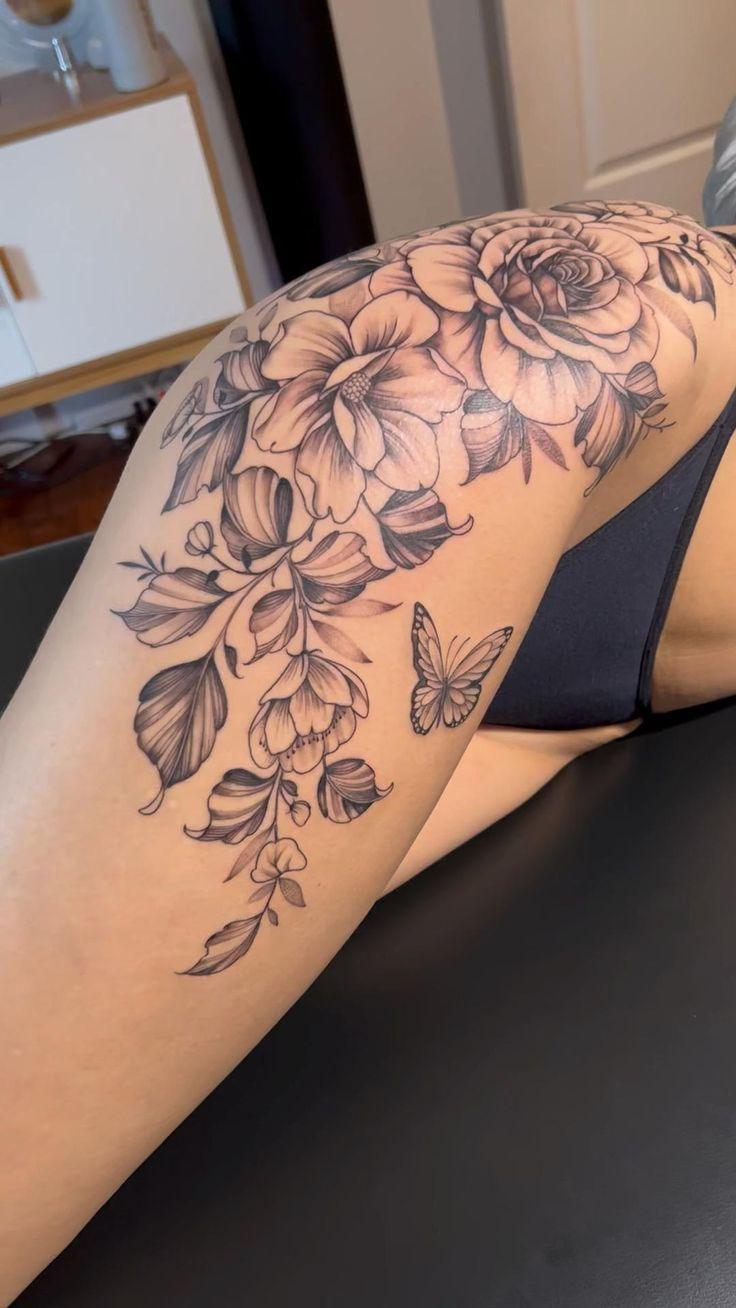
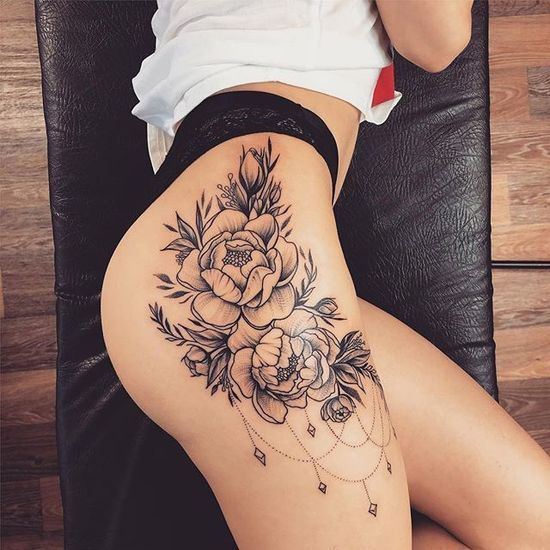
Flowers are the single most requested hip tattoo category for women — and for good reason. They follow the body's natural curves gracefully, scale beautifully from small to large, and carry a rich symbolic vocabulary.

Most popular flowers for hip tattoos and their meanings:

  • Rose: Love, beauty, strength, and the complexity of passion — the thorns remind us that beauty requires courage

  • Peony: Feminine power, prosperity, good fortune, and romance — particularly striking in neo-traditional and Japanese styles

  • Lotus: Spiritual growth, resilience, and rising above hardship — deeply meaningful for women who've overcome difficult chapters

  • Sunflower: Joy, loyalty, and turning toward the light — symbolizes someone who brings warmth to those around them

  • Wildflowers / Botanical sprays: Freedom, natural beauty, authenticity — popular as flowing compositions that wrap the hip organically

  • Cherry Blossom: The beautiful impermanence of life — a reminder to embrace the present moment

Design tip: Botanical compositions that start at the hip bone and trail down the thigh — or curve up toward the waist — tend to be among the most visually stunning hip tattoos. The asymmetry follows the body's natural lines rather than fighting them.


🦋 Butterfly Tattoos

One of the most symbolically powerful choices for the hip — and one that has experienced a massive resurgence in modern tattoo culture.

A butterfly on the hip represents transformation, freedom, and new beginnings. The hip placement specifically adds a layer of intimacy to this meaning — this transformation is personal, carried close, not immediately broadcast to the world.

Design variations range from hyper-realistic to neo-traditional to geometric and abstract — all work beautifully on this placement.


🌙 Moon and Celestial Tattoos

Moon phases, crescent moons, stars, and celestial compositions are extraordinarily popular on the hip — and the symbolism aligns perfectly with the placement's intimate nature.

  • Full moon: Wholeness, power, abundance, the peak of the cycle

  • Crescent moon: Intuition, mystery, the liminal space between who you were and who you're becoming

  • Moon phases: The full cycle of change — waxing, full, waning — representing life's rhythms and the acceptance of change

  • Sun and moon together: Balance between masculine and feminine, between darkness and light, between logic and emotion


🐍 Snake Tattoos

The snake on the hip is a bold, powerful choice that carries layered symbolism:

  • Rebirth and transformation — snakes shed their skin and emerge renewed

  • Wisdom and intuition — in many traditions, the serpent represents secret knowledge

  • Feminine power — the snake winding along the hip has become a distinctly powerful feminine image

  • Protection — in multiple cultures, the snake is a guardian figure

The snake's natural sinuous form makes it exceptionally well-suited to the hip's curves — a snake wrapping from the hip down toward the thigh is one of the most dynamic and visually striking hip tattoo compositions possible.


🔮 Mandala Tattoos

Mandalas on the hip represent balance, wholeness, the universe, and the self. Their circular symmetry works beautifully on the rounder contours of the hip area, and their intricate detail fills the space richly without feeling overloaded.

For women drawn to spiritual or meditative practice, a mandala hip tattoo often becomes one of their most personally significant pieces — a reminder of balance carried privately.


✍️ Script and Quote Tattoos

The hip's long, curved surface makes it a surprisingly excellent canvas for meaningful words, phrases, or quotes. The natural arc of the hip bone gives script an organic flow that flat surfaces don't provide.

Popular script choices for hip tattoos:

  • Single meaningful words: breathe, worthy, enough, fierce, wild

  • Lines from poetry, literature, or song lyrics that have changed your life

  • Names or dates marking significant people or turning points

  • Phrases in other languages — Latin, French, and Italian are particularly popular


🌊 Ornamental and Geometric Designs

Flowing ornamental patterns — inspired by Art Nouveau, mandala geometry, or Polynesian motifs — work exceptionally well on the hip because they can be designed to follow and enhance the body's natural contours. When a skilled artist creates an ornamental hip piece specifically for your body shape, the result looks as though the design grew from the body rather than being placed on it.


Inner Hip vs. Outer Hip: Which Is Right for You?


Hip Bone / Inner Hip

Outer / Side Hip

Visibility

Highly intimate — revealed mainly in swimwear or intentionally

More visible in casual clothing

Pain

Higher (6–8/10 near bone)

Lower (3–5/10 on fleshy areas)

Healing

More challenging — friction from waistbands

Slightly easier — less clothing contact

Best for

Deeply personal, intimate pieces

Bolder, more visible statement pieces

Design suitability

Flowing, linear designs that follow the bone

Larger, more expansive compositions

The honest recommendation: if this is your first hip tattoo, start on the outer or side hip where the experience is more manageable. Once you understand how your body heals in this area, you'll be better prepared for the intensity of working closer to the bone.

The Question Everyone Asks: What Happens to Hip Tattoos During Pregnancy or Weight Changes?

This is one of the most searched questions about hip tattoos — and it deserves an honest, nuanced answer.


Gradual Weight Changes

Slow, gradual weight gain or loss typically has minimal impact on a hip tattoo. Skin is remarkably adaptive when changes occur gradually — it expands and contracts over time without significantly distorting well-placed tattoo designs. Most people who experience gradual weight fluctuations report little to no noticeable change in their hip tattoos.

Rapid, significant weight changes are a different story. Fast changes — particularly large amounts gained or lost quickly — can cause skin to stretch or contract faster than it can adapt. In these cases, some stretching or softening of fine line details is possible, particularly on the lower abdomen or direct hip bone areas.


Pregnancy

Pregnancy is the scenario most often discussed — and the reality is more reassuring than many people fear.

The hip tattoo's fate during pregnancy depends heavily on placement:

  • Side hip / outer hip: Often minimally affected. The abdomen expands forward, not laterally to the same degree. Many women find their side hip tattoos emerge from pregnancy essentially unchanged.

  • Hip bone area: Can experience some stretching, particularly in the third trimester when the lower abdomen and hip flexors are under maximum strain.

  • Lower abdomen / front hip: This area is most susceptible to stretch marks and skin expansion during pregnancy. Designs in this zone carry the highest risk of distortion.

The bottom line: If pregnancy is in your plans and you want a hip tattoo that's most likely to survive it intact, the outer and side hip placements are your safest choices. Avoid the front hip and lower abdomen if preservation through pregnancy is a priority.

💡 Real talk from the tattoo community: Many women with hip tattoos who have been pregnant report that their tattoos were affected far less than they feared. Keeping skin well-moisturized throughout pregnancy (with products like Hustle Butter Deluxe) helps maintain elasticity and can reduce the impact of skin expansion on your ink.

Do Hip Tattoos Fade Faster Than Other Placements?

Hip Tattoos

Moderate fading risk — higher than, say, an upper arm tattoo, but lower than hands or fingers.

The main fading factors for hip tattoos specifically:

Clothing friction: Waistbands, underwear elastic, and tight clothing rubbing against a healed hip tattoo cause gradual wear over time. This is a genuine consideration — choose clothing styles that don't constantly press against your tattoo's location.

Sun exposure: If you wear swimwear regularly, your hip tattoo may see significant UV exposure. This is the biggest long-term fading factor. Applying Mad Rabbit SPF 30 every time the area will be exposed is the single most effective way to preserve color and line crispness for years.

Skin type and metabolism: Individual differences in skin cell turnover, oil production, and how your body processes pigment affect all tattoos — the hip is no exception.

Design type: Fine line work and watercolor elements will show age faster than bold blackwork or solid fills. If longevity is a priority, discuss ink and technique choices with your artist.


How to Choose the Right Hip Tattoo Design

With so many options, the decision can feel overwhelming. Here's a framework that actually helps:


Start with the question: what does this placement mean to me?

The hip is intimate. The designs that resonate most deeply here tend to be ones that carry genuine personal meaning — something you'd want to hold privately, to carry on a part of your body that belongs to you.

Ask yourself:

  • Is this a story I want to tell, or a feeling I want to hold?

  • Do I want this visible in a swimsuit, or reserved for intimacy?

  • Is this a standalone piece, or the beginning of something larger?


Consider how the design follows your body

The hip's curves are its greatest asset as a tattoo canvas — and the best hip tattoos are designed for those curves, not simply placed on them. A skilled artist will draw or digitally position the design on your specific body before finalizing it, adjusting line directions and composition to enhance your natural silhouette.


Think about how it ages

Bold lines and solid fills age better than delicate fine line work on the hip. If you're choosing fine line, know that a touch-up session in 5–8 years may be needed to refresh the detail.


Match the style to your personality

  • Elegant and intimate → fine line botanicals, delicate script, small symbols

  • Bold and sensual → large florals, serpent wraps, neo-traditional pieces

  • Spiritual and meaningful → mandala, moon phases, lotus, celestial compositions

  • Feminine and fierce → butterfly with geometric elements, ornamental blackwork


Hip Tattoo Aftercare: The Complete Protocol

Hip Tattoos

The hip presents some unique aftercare challenges that other placements don't — primarily because of clothing friction and the area's natural movement. Follow these steps carefully.

Immediate Care (First 24–48 Hours)

Your artist will cover the fresh tattoo with either a traditional bandage or a protective film like Saniderm Tattoo Bandages. Saniderm is particularly valuable for hip tattoos — it creates a sealed environment that protects the area from waistband friction during the most vulnerable early healing window.

If using traditional wrap:

  • Remove after 2–4 hours

  • Wash gently with a fragrance-free, gentle cleanser — this gentle soap is ideal for fresh ink without irritating sensitive hip skin

  • Pat dry carefully with a clean paper towel — never rub

  • Apply a very thin layer of healing ointment


Days 1–14: Active Healing

  • Moisturize consistently — apply Aquaphor Healing Ointment 2–3 times daily. Thin layer only — you want to moisturize, not suffocate the skin

  • For a premium all-natural option, Hustle Butter Deluxe is exceptional for hip tattoos — deeply nourishing without clogging pores or irritating healing skin

  • Clothing is critical — this is where hip tattoo aftercare differs from most placements. Avoid any waistband sitting directly on the healing tattoo. Loose cotton bottoms that sit below or well above the tattoo are essential during the healing window

  • Avoid: swimming, soaking baths, saunas, direct sun exposure, gym activities that create friction or heavy sweating in the area

  • Never pick or scratch — the hip area can develop more substantial peeling than areas with less movement. Resist every urge


Sleeping During Hip Tattoo Healing

For side hip and hip bone tattoos, you'll need to sleep on the opposite side to avoid pressing the fresh tattoo into the mattress. A silk or satin pillowcase — while designed for face tattoos — also works wonderfully placed under the hip area to reduce friction for those who tend to move in their sleep.


Long-Term Maintenance

Once fully healed (4–6 weeks):

  • Apply Mad Rabbit SPF 30 every time the hip area will be exposed to sun — beach days, pool time, or summer clothing. This is the single most impactful thing you can do for long-term vibrancy

  • Keep the skin consistently moisturized with Hustle Butter Deluxe — healthy, elastic skin holds pigment better and makes your tattoo look richer for longer

  • Choose underwear and clothing with soft waistbands that don't dig into healed tattoo areas — chronic friction causes gradual wear even on fully healed ink

Hip Tattoo Healing: Week by Week

Hip Tattoos

Phase

Timeline

What to Expect

Fresh

0–48 hours

Redness, swelling, some fluid weeping — normal

Early healing

Days 2–5

Skin tightens, itching begins, area may feel warm

Peeling phase

Days 5–14

Skin peels and flakes — do NOT pick

Ghost phase

Days 7–14

Colors may look dull or faded — completely normal

Surface healed

Weeks 2–3

Peeling complete, surface closes

Full healing

Weeks 4–6

Deep tissue heals, final result visible

⚠️ Hip-specific note: Because of clothing friction and the area's natural movement during walking and bending, hip tattoos can sometimes take slightly longer to surface-heal than arm or shoulder placements. Be patient — a few extra days of peeling is normal and not a sign of a problem.

How Much Does a Hip Tattoo Cost?

Size & Style

Estimated Cost

Small (2–3 inches, simple design)

$80–$200

Medium (4–6 inches, moderate detail)

$200–$450

Large (hip-to-thigh piece, full composition)

$450–$1,200+

Full hip-to-thigh wrap or body suit section

$1,200–$3,000+

Touch-up session

$60–$150

Prices vary significantly by artist experience, location, and design complexity. For a placement as personal and visible-in-intimate-settings as the hip, this is not the place to compromise on artist quality. Always review healed work portfolios specifically — fresh tattoos always look sharp; what matters is how they look 6–8 weeks later.

What to Wear to Your Hip Tattoo Appointment

Hip Tattoos

This is a practical question that catches many people off guard — and the answer matters more for hip tattoos than almost any other placement.

What works:

  • Low-rise underwear or a thong — allows full access to the hip area

  • A loose wrap skirt or sarong — easy to move aside for placement access

  • A bikini bottom or swimsuit bottom — practical and comfortable

  • Loose cotton pants worn low on the hips — comfortable for long sessions

What to avoid:

  • High-waisted jeans or leggings — they'll press directly on fresh ink when you leave

  • Tight underwear with thick elastic waistbands — the elastic will irritate healing skin

  • Anything you'd be upset about getting ink transfer on — your artist will clean the area but some transfer to clothing is possible

Pro tip: Bring a change of clothes for after your appointment — specifically, the loosest, most low-waisted option you own. The area will be wrapped, but keeping any pressure off fresh ink for the drive home matters.


Frequently Asked Questions


Are hip tattoos a good idea for first-time tattoo recipients? The outer or side hip is actually a reasonable choice for a first tattoo — the fleshier areas are manageable in terms of pain, and the placement can be easily covered while healing. However, the hip bone area specifically is not ideal for a first tattoo. If you've never been tattooed before and want a hip piece, discuss placement options with your artist to choose the most approachable spot.


Will my hip tattoo be visible in a swimsuit? It depends entirely on where it's placed. A side hip or hip dip tattoo will typically be partially or fully visible in a bikini. A tattoo directly on the hip bone may be visible at the waistband. Front hip tattoos are usually partially revealed in low-cut swimwear. This is worth thinking through intentionally — know what you want your visibility preferences to be before deciding on exact placement.


Can I work out after getting a hip tattoo? Avoid any exercise that causes significant friction on the area, sweating, or bending that stretches the hip skin for at least 2 weeks. Light walking is generally fine after 48 hours. Gym equipment, yoga, running, and cycling should be paused during the active healing phase.


How do I know if my hip tattoo is infected? Normal healing involves redness, swelling, and warmth in the first 48 hours, followed by itching and peeling in days 3–14. Signs that warrant medical attention: spreading redness beyond the tattoo borders after 48 hours, fever, pus or unusual discharge, excessive swelling that worsens rather than improves, or extreme pain beyond the first session. If in doubt, contact your artist or a healthcare provider.


Can I get a hip tattoo if I'm plus-size? Absolutely. The hip is a beautiful placement for all body types — and for curvier women, the fuller contours of the hip area actually enhance certain design types magnificently. The key is working with an artist experienced in designing for your body's specific shape and curves. Always have a detailed in-person consultation so your artist can design the piece specifically for your proportions.


How long should I wait before getting a hip tattoo touch-up? Wait a minimum of 6–8 weeks after the initial session before a touch-up — you need the skin to be fully healed at the deep tissue level, not just surface-closed. Some artists prefer to wait 8–10 weeks for hip pieces specifically because the area can take slightly longer to fully stabilize.


Do hip tattoos look good on everyone? Yes — with the right design and placement approach. The key is choosing a design and composition specifically suited to your body shape rather than copying something that looked great on someone with a different build. Great artists design for the individual, not just on them. This is why the consultation process matters so much.


The Products That Make Hip Tattoo Healing Easier

Hip Tattoos

The hip's unique challenges — clothing friction, movement, and potential sun exposure — mean having the right products on hand before your appointment is especially important:

  • 🛡️ Protective Film: Saniderm Tattoo Bandages — invaluable for hip tattoos specifically, creating a barrier against waistband friction during the most vulnerable healing days

  • 🧼 Gentle Cleanser: Fragrance-free gentle soap — essential for clean healing without irritating sensitive hip skin

  • 💧 Healing Ointment: Aquaphor Healing Ointment — a universally trusted option for active healing, recommended by artists worldwide

  • 🌿 Tattoo Butter: Hustle Butter Deluxe — all-natural, fragrance-free deep nourishment for both healing and long-term skin health around your hip tattoo

  • ☀️ SPF Protection: Mad Rabbit SPF 30 — formulated specifically for tattooed skin; non-greasy and essential for any sun exposure after healing

  • 👖 Loose Clothing: Comfortable loose cotton pants — critical for the healing period; keeping fabric pressure off the hip makes a genuine difference in healing quality

  • 🛏️ Silk Pillowcase: Satin/Silk pillowcase — useful placed under the hip area during sleep to reduce friction on healing skin for side-hip placements


Is a Hip Tattoo Right for You?

The women who love their hip tattoos most share a few things in common:

They chose a design with genuine personal meaning — not just something that looked good on Instagram. They worked with an artist who designed specifically for their body rather than adapting a generic template. They took aftercare seriously, especially around clothing choices during healing. And they protect their ink from the sun consistently.

Do those things, and a hip tattoo becomes one of the most rewarding pieces you'll ever own — intimate, powerful, and entirely yours.


Inspiration an Ideas


Related Articles You Might Enjoy


Comments


bottom of page