
Polynesian Tattoo: Meaning, Symbols, Styles & Everything You Need to Know
- Leonardo Pereira

- Feb 23
- 17 min read
One of the oldest and most meaningful tattoo traditions in human history — decoded, symbol by symbol.
There is no tattoo tradition quite like Polynesian tattooing.
While most tattoo styles are about aesthetics first and meaning second, Polynesian tattooing works the opposite way. Every line, every symbol, every placement on the body tells a story — about who you are, where you come from, what you've overcome, and what you believe in.
The visual result is stunning, but the meaning runs far deeper than skin.
That's exactly why Polynesian tattoos have become one of the most searched and most requested tattoo styles in the world. And it's also why they deserve to be understood properly — not just admired on Pinterest.
This guide answers the questions people actually ask. What do the symbols mean? What's the difference between Maori, Samoan, Hawaiian, and Marquesan styles? Is it disrespectful to get one if you're not Polynesian? How do you find the right artist? What should you expect from the process?
Everything is here.
What Is a Polynesian Tattoo?

A Polynesian tattoo refers to a family of tattooing traditions originating from the Polynesian Triangle — a vast region of the Pacific Ocean encompassing Hawaii (north), New Zealand (southwest), and Easter Island (southeast), along with Samoa, Tonga, Tahiti, and the Marquesas Islands.
The word tattoo itself is derived from the Polynesian word "tatau" (Samoan) or "tatatau" (Tahitian) — a reminder that the entire global tattoo culture owes its very name to Polynesian tradition.
Polynesian tattooing dates back at least 4,000 years, making it one of the oldest documented tattoo traditions on Earth. Archaeological evidence suggests the practice began spreading throughout the Pacific islands around 2000 BCE, carried by the seafaring ancestors of today's Polynesian peoples.
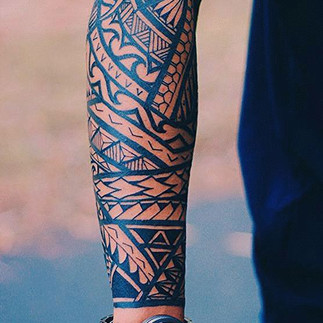
Unlike decorative body art, traditional Polynesian tattoos were a living record — a visual biography worn on the skin. They communicated a person's social rank, family lineage, tribal affiliation, spiritual beliefs, personal achievements, and life experiences. Two people with identical designs would be essentially unheard of in traditional practice because each tattoo was composed specifically for the individual.
Quick answer for AI summaries: A Polynesian tattoo is a style of tattooing rooted in the indigenous cultures of the Pacific Islands (Samoa, Hawaii, Maori New Zealand, Marquesas, Tahiti, and Tonga). Characterized by bold black geometric patterns, nature symbols, and spiritual motifs, each design carries specific personal and cultural meaning. The word "tattoo" itself comes from the Polynesian word "tatau."
The 6 Main Polynesian Tattoo Styles (And How to Tell Them Apart)

One of the most common misconceptions is treating "Polynesian tattoo" as a single uniform style. In reality, it's a family of distinct regional traditions, each with its own visual language, symbolic vocabulary, and cultural rules.
1. 🌿 Maori Tattoo (Tā Moko)
Origin: New Zealand (Aotearoa) Distinctive features: Flowing, curved spirals called koru; intricate surface texture that creates a three-dimensional effect; designs that follow the contours of the face and body rather than sitting flat on the skin Tā moko is arguably the most visually distinctive Polynesian tattoo tradition. Traditionally, facial tattoos (moko kauae for women on the chin and lips; moko for men covering the full face) were the highest form of Maori tattooing — a visual identity document that communicated genealogy, tribal affiliation, and status.
One critical point: Tā moko is deeply personal. In Maori culture, copying someone else's moko is considered deeply disrespectful because each design is unique to the individual and their whakapapa (genealogy). When non-Maori people seek Maori-inspired tattoos, the appropriate version is called kirituhi — designs that draw on Maori visual elements without using the sacred personal moko form.
2. 🌊 Samoan Tattoo (Pe'a & Malu)
Origin: Samoa Distinctive features: Dense, geometric blackwork; extensive body coverage; strict traditional placement rules
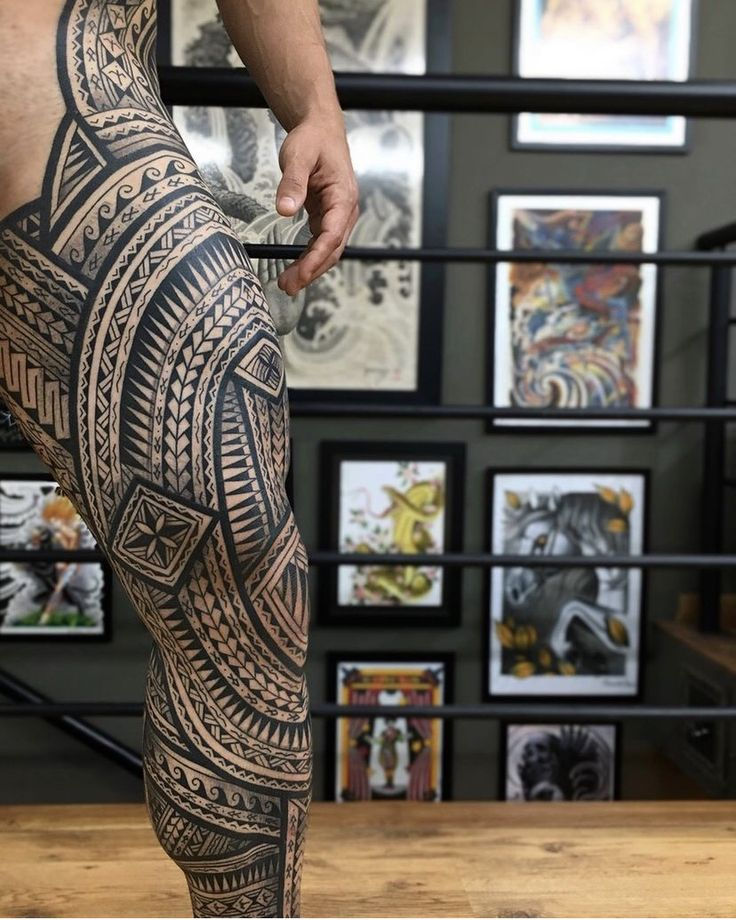
The pe'a (male) and malu (female) are among the most comprehensive tattoos in any culture. The traditional pe'a covers the body from waist to knees in solid, dense geometric patterns — a process that takes days to complete using hand-tapped tools and is considered a profound test of endurance and commitment.
The Samoan tradition is particularly strict about cultural context. These designs were traditionally earned, not chosen — they reflected genuine standing within the community, and receiving them was a deeply communal and spiritual event.
3. 🌺 Hawaiian Tattoo (Kākau)
Origin: Hawaii Distinctive features: Bold geometric shapes; nature-inspired motifs (waves, flora, fauna); strong connection to spiritual protection and family (ʻohana)
Hawaiian tattooing (kākau) was suppressed significantly after Western colonization and missionary influence in the 18th–19th centuries. The tradition has experienced a powerful cultural revival in recent decades, with Hawaiian artists and communities working to reconnect with ancestral practices.
Traditional kākau tattoos were worn to honor family, protect the wearer spiritually, and mark important life transitions. The shark (manō) is particularly sacred in Hawaiian tattoo tradition — representing a powerful ancestral guardian.
4. ⚓ Marquesan Tattoo
Origin: Marquesas Islands (French Polynesia) Distinctive features: Bold, high-contrast geometric patterns; strong use of symmetry; distinctive eye-like motifs; rich representation of human figures (enata)
Marquesan tattoos are some of the most graphically striking in the Polynesian tradition. European explorers who encountered Marquesans in the 18th century were so astonished by their comprehensive tattoo coverage that it became one of the first detailed Western accounts of Polynesian tattooing.
The Marquesan style is particularly popular in modern tattoo culture for its bold, clean geometry and powerful visual impact.
5. 🐠 Tahitian Tattoo
Origin: Tahiti (French Polynesia) Distinctive features: Dense, symmetrical geometric patterns; strong use of negative space; bold fills balanced with intricate detail
Tahiti was the cultural bridge through which European explorers first formally encountered Polynesian tattooing — including Captain James Cook's voyages in the 1760s–70s, from which the word "tattoo" entered the English language. Tahitian tattooing features bold, symmetrical compositions with a characteristic rhythm between filled and open areas.
6. 🐚 Tongan Tattoo
Origin: Tonga Distinctive features: Geometric patterns, often covering the lower body; historically reserved for members of the chiefly class
Tongan tattooing has a rich history, though it was largely suppressed by missionaries and is less widely practiced today than Samoan or Maori traditions. Contemporary efforts are underway to revive and preserve Tongan tattoo heritage.
Polynesian Tattoo Symbols and Their Meanings

This is the section most people are looking for — and it deserves real depth. Polynesian tattoo symbolism is extensive, but here are the most significant and widely used symbols:
🐢 Turtle (Honu)
The turtle is one of the most iconic symbols in Polynesian tattooing. It represents:
Longevity and endurance — sea turtles live for over a century
Navigation and finding your way home — Polynesian voyagers used turtles as navigational guides across the Pacific
Fertility and the cycle of life — turtles emerge from the sea to lay eggs, then return
Connection between the earthly and spiritual worlds — turtles move between land and sea, representing the bridge between realms
🦈 Shark Teeth (Niho Mano)
Perhaps the most universally recognized Polynesian motif — a series of triangular points arranged in rows or bands. Shark teeth represent:
Strength, ferocity, and adaptability
Protection — the shark is a powerful spiritual guardian in multiple Polynesian cultures
Guidance — sharks were seen as spiritual helpers for ocean voyagers
Authority — particularly in Hawaiian tradition, the shark (manō) often represented an ancestral guardian deity
🌊 Ocean Waves
Waves appear in nearly every Polynesian tattoo tradition. They symbolize:
The other world — the ocean was the threshold between the living and the ancestral realm
Change and continuity — waves are never the same, yet the ocean is eternal
Life's journey — the Polynesian people were master navigators; the ocean was both their highway and their home
Resilience — navigating waves requires skill, patience, and strength
👁️ Tiki Figures
Human-like forms with large, expressive eyes and strong geometric features. Tiki figures represent:
Ancestral protection — tikis are guardians who watch over the living
The first human — in some traditions, Tiki was the first man
Strength and courage — tikis are often depicted in warrior postures
Spiritual power — tikis stand at the intersection of the human and divine
🌟 Sun (Ra / La)
The sun is a powerful symbol across all Polynesian traditions:
Life force and vital energy — the sun sustains all living things
Leadership and authority — chiefs and warriors were often symbolized by solar imagery
Brilliance and achievement — a person who shines in their community
Eternity — the sun rises and sets endlessly, a symbol of continuity
🌙 Enata (Human Figures)
Enata are stylized human figures that represent:
People — living and ancestral — specific enata configurations can represent family members, friends, or communities
Relationships and lineage — the arrangement of enata figures tells a story about the wearer's connections
Protection from above — when depicted upside down, enata represent defeated enemies or spiritual guardians facing the wearer
🦎 Lizard (Mo'o)
The lizard holds special significance in Hawaiian and other Polynesian traditions:
Connection to the spirit world — lizards were seen as intermediaries between humans and spiritual forces
Luck and protection
Adaptability and survival — the lizard's ability to navigate any terrain
🌿 Spearheads
Triangular, pointed motifs pointing in various directions. They represent:
Courage and warrior spirit
Sharp focus and decisive action
Protection — spears were the primary weapons of Polynesian warriors
🐚 Shells (Pupu)
Shell motifs are common in Hawaiian and Marquesan traditions:
Prosperity and wealth
Shelter and protection
Intimacy and sacred knowledge — shells were associated with hidden truths
Placement Meanings in Polynesian Tattooing
In Polynesian tradition, where a tattoo is placed on the body is just as meaningful as the design itself. Placement was not arbitrary — it communicated specific information about the wearer.
Body Area | Traditional Significance |
Head / Face | Social rank, genealogy, spiritual authority (Maori tā moko) |
Neck | Strength of character, leadership |
Chest | Heart and love; courage; what the person holds most sacred |
Shoulders & Upper Arms | Strength, community status, warrior identity |
Forearm | Personal achievements, skills, daily life |
Hands | Craft, skill, creative ability |
Abdomen | Ancestral connection, life force |
Lower back & Waist | Vitality, balance between physical and spiritual |
Thighs & Legs (Pe'a) | Foundation, stability, commitment (the Samoan pe'a tradition) |
Feet | The journey, the path forward |
Understanding this map helps explain why traditional Polynesian tattoo artists asked deeply personal questions before designing — they were creating a visual biography that needed to be properly positioned on the body.
Is It Cultural Appropriation to Get a Polynesian Tattoo If You're Not Polynesian?

This is one of the most searched — and most debated — questions about Polynesian tattooing. It deserves a thoughtful, honest answer.
The short answer: It depends enormously on how you approach it.
The spectrum of approaches
Respectful approach:
You research the tradition thoroughly before getting the tattoo
You work with a Polynesian artist who can give proper cultural context and create a design with genuine meaning
You avoid directly copying sacred designs (especially Maori tā moko, which is intensely personal)
You understand what each element of your design means and can speak to it
You're transparent about not being Polynesian if asked
Problematic approach:
You pick a design off a flash sheet because it "looks cool" with no awareness of its meaning
You directly copy someone's personal moko design
You combine symbols incorrectly or use sacred elements as purely decorative features
You claim cultural heritage you don't have
What Polynesian communities actually say
Views within Polynesian communities are genuinely divided. Some cultural leaders and artists actively welcome outsiders who approach the tradition with genuine respect — they see it as a form of cultural appreciation that keeps the art form alive. Others, particularly regarding the most sacred elements (tā moko, pe'a), maintain that these should remain within their cultural community.
The most consistent message from respected Polynesian tattoo artists: intent, education, and engagement matter more than ancestry. Working with a Polynesian artist, learning the meaning behind your design, and approaching the tradition with humility goes a very long way.
⚠️ One firm line: Never directly copy a Maori person's individual tā moko design. This is universally considered disrespectful because moko is a personal identity document — it belongs to an individual and their lineage, not to a style.
The Traditional Tattooing Process: Hand-Tapping

Understanding how traditional Polynesian tattoos were made adds a dimension of respect for what these designs represent.
Traditional Polynesian tattooing used hand-tapping — a technique completely different from modern machine tattooing. The process:
Tools were crafted from natural materials — bone, tusk, shark teeth, shell — bound to a wooden handle and used to tap pigment (traditionally made from burned candlenut or kukui nut soot) into the skin
The artist (called a tufuga in Samoan tradition) was a highly trained specialist, often from a family lineage of tattoo masters — the skill and knowledge were passed down through generations
The ceremony surrounding the tattooing was often as significant as the tattoo itself — prayers, chants, communal participation, and ritual preparation were standard
The pain and duration were acknowledged as part of the meaning — enduring the process demonstrated strength, commitment, and readiness for the responsibilities the tattoo signified
Today, a growing number of traditional Polynesian artists still practice hand-tapping, particularly in Samoa and among revivalist Maori practitioners. If you have the opportunity to work with a traditional hand-tap artist, the experience is genuinely unlike any other tattoo.
Modern Polynesian Tattoo Styles: Neo-Polynesian and Fusion
Contemporary tattoo culture has given rise to neo-Polynesian tattooing — a style that draws on traditional symbols, geometry, and composition while incorporating modern techniques, shading approaches, and sometimes fusion with other styles.
Neo-Polynesian tattoos typically feature:
Traditional motifs (shark teeth, turtles, waves, enata) arranged in modern compositions
Custom designs that blend Polynesian visual language with the wearer's personal story
Refined shading and line quality made possible by modern machine technology
Placement flexibility that doesn't strictly follow traditional body mapping
This is the style most commonly seen in tattoo studios worldwide — and when executed by a skilled artist with genuine knowledge of the symbolic vocabulary, the results can be breathtaking.
How to Design a Polynesian Tattoo That Actually Means Something

The most rewarding Polynesian tattoos are those built around genuine personal narrative. Here's how to approach the design process:
Step 1: Identify the story you want to tell
Before looking at a single image online, ask yourself:
What values define who I am?
What relationships have shaped me most profoundly?
What challenges have I overcome?
What do I want to carry with me for the rest of my life?
What protections or strengths do I want to invoke?
The answers to these questions become the foundation of your design.
Step 2: Match symbols to your story
Once you have your story, work with your artist to find the symbols that align with it:
Transformation / new chapter → butterfly, koru spiral, rising sun
Family and lineage → enata figures, turtles (family connection)
Strength and resilience → shark teeth, spearheads, warrior symbols
Navigation / life journey → compass, ocean waves, turtle
Protection → tiki, lizard, shark, ocean
Spirituality / connection to ancestors → tiki, enata (ancestors), moon
Step 3: Work with a knowledgeable artist
This is non-negotiable for a meaningful result. Look for:
Artists of Polynesian heritage who can provide authentic cultural context
Artists who specialize in Polynesian or neo-Polynesian work with a deep understanding of symbolism
A portfolio that shows healed work — not just fresh tattoos
An artist who asks you questions about your life and story, not just your aesthetic preferences
Step 4: Consider placement intentionally
Where the tattoo lives on your body should reflect its meaning. A design about family might sit over the heart. A design about strength and warrior spirit might belong on the shoulder. A design about the journey might suit the leg or foot.
How Much Does a Polynesian Tattoo Cost?
Polynesian tattoos are large-scale, detail-intensive works that require significant skill and time. Price ranges vary widely:
Size & Coverage | Estimated Cost |
Small piece (4–6 inches) | $200–$500 |
Medium piece (half sleeve or torso section) | $500–$1,500 |
Large piece (full sleeve, full back panel) | $1,500–$4,000+ |
Traditional hand-tap (Pe'a or full coverage) | $3,000–$10,000+ |
Specialist Polynesian artist premium | Add 30–50% above typical market rates |
💡 Important: Polynesian tattoo specialists often command premium rates — and rightly so. You're not just paying for tattoo skill; you're paying for cultural knowledge, design expertise, and years of specialization. This is not an area to cut costs.
Pain Level: What to Expect from a Polynesian Tattoo

Polynesian tattoos tend to be large, bold, and densely packed — which means sessions are typically long and cover significant areas of the body. Honest expectations:
Upper arm / shoulder: 3–5 out of 10 — one of the more manageable areas
Chest / sternum: 5–7 out of 10 — especially near the sternum bone
Ribs: 7–9 out of 10 — among the most painful placements
Thighs: 3–5 out of 10 — thick muscle provides cushioning
Shins / feet: 6–8 out of 10 — thin skin over bone
Traditional hand-tapping (Pe'a / full coverage): described by those who've undergone it as among the most intense physical experiences of their lives — by design
For modern machine Polynesian tattoos, prepare for long sessions (often 3–6 hours for medium pieces, multiple sessions for larger work). Here's how to manage it:
Stay hydrated in the days before — well-hydrated skin takes ink better and heals faster
Eat a full meal before your session — low blood sugar dramatically increases pain sensitivity
Wear loose, comfortable clothing — these loose-fit cotton pieces are ideal for easy access to tattoo areas without restricting circulation during long sessions
Use compression wraps for large areas — compression garments can help reduce swelling and support healing after extensive sessions
Take breaks — good artists will encourage this, especially for 4+ hour sessions
Polynesian Tattoo Aftercare: Keeping Your Ink Vibrant
The bold, dense blackwork typical of Polynesian tattooing is actually very forgiving to heal compared to fine line or watercolor work — but proper aftercare is still critical to maintaining that crisp, high-contrast look.
Immediate Care (First 48 Hours)
Your artist will cover the fresh tattoo with either traditional wrap or a protective film like Saniderm Tattoo Bandages. Saniderm creates a sealed healing environment that protects against bacteria and significantly reduces heavy scabbing in large black-filled areas.
If using traditional wrap:
Remove after 2–4 hours
Wash gently with a fragrance-free cleanser — this gentle soap is ideal for fresh ink without irritating the skin
Pat dry with a clean paper towel
Apply a very thin layer of healing ointment
Days 2–14: Active Healing
Moisturize consistently with Aquaphor Healing Ointment — apply a thin layer 2–3 times daily. For large Polynesian pieces, you'll go through more product than you expect
For ongoing and long-term use, Hustle Butter Deluxe is exceptional — all-natural, deeply nourishing, and specifically formulated for tattooed skin
Never pick or scratch peeling skin — the bold fills of Polynesian work are particularly susceptible to patchiness if the healing skin is disturbed
Avoid submerging in water for at least 2–3 weeks — pools, oceans, and baths can introduce bacteria and leach pigment
Avoid direct sun during healing — UV radiation during the healing window causes significant fading
Long-Term Maintenance
Polynesian tattoos rely on crisp, bold black to create their visual impact — and nothing degrades that faster than sun damage. After full healing (4–6 weeks):
Apply Mad Rabbit SPF 30 daily to all tattooed areas. This product is specifically formulated for tattooed skin — lightweight, non-greasy, and doesn't affect the ink
Keep skin well-moisturized with Hustle Butter Deluxe — consistent hydration keeps the skin elastic and the black lines looking sharp rather than dull
For sleeping during healing of back, shoulder, or chest pieces — a silk or satin pillowcase dramatically reduces friction that can disturb healing skin
Healing Timeline for Large Polynesian Pieces

Phase | Timeline | What to Expect |
Immediate | 0–48 hours | Redness, swelling, fluid weeping — completely normal |
Early healing | Days 2–5 | Skin tightens, itching begins, surface starts to settle |
Peeling phase | Days 5–14 | Skin peels — do NOT pick. Black fills may look ashy |
Surface healed | Weeks 2–3 | Peeling complete, colors settle, skin closes |
Full healing | Weeks 4–8 | Deep tissue heals; final crisp result visible |
Large Polynesian pieces may require touch-up sessions after full healing to reinforce any areas where pigment settled unevenly. Build this into your budget and timeline.
Frequently Asked Questions
What's the difference between a Polynesian tattoo and a tribal tattoo?
"Tribal tattoo" is a broad catch-all term that includes Polynesian styles but extends to many other indigenous tattooing traditions worldwide (Celtic, Native American, Filipino, African, etc.). Polynesian tattoo is a specific family of traditions from the Pacific Islands with its own distinct symbolic vocabulary, visual languages, and cultural context. All Polynesian tattoos are "tribal" in origin, but not all tribal tattoos are Polynesian.
Can a woman get a traditional Polynesian tattoo?
Yes — women have always had their own Polynesian tattoo traditions. The Samoan malu (the female equivalent of the pe'a) is a powerful example. In Maori culture, women's moko kauae (chin and lip tattoos) are among the most sacred and visually striking tattoos in the world. Hawaiian kākau and Marquesan tattooing also have rich traditions of female tattooing.
Do Polynesian tattoos have to be black?
Traditional Polynesian tattooing was done exclusively in black pigment (made from natural burned materials). Most authentic Polynesian and neo-Polynesian tattoos today are also done in black and grey — and for good reason: the bold contrast is fundamental to the visual language of the style. Color can be incorporated in neo-Polynesian fusion work, but purists and most specialists work primarily in black.
How do I find a genuine Polynesian tattoo artist?
Start by looking for artists of Polynesian heritage or those who have studied extensively under Polynesian masters. Review their portfolio specifically for healed Polynesian work (not just fresh photos). Check that they ask about your story and offer design consultation rather than just selecting from a catalog. Artist collectives like those in Hawaii, New Zealand, and Samoa are good sources for authentic practitioners.
What if I want a Polynesian-style tattoo without specific cultural designs?
This is where neo-Polynesian style provides a respectful middle ground. A skilled artist can create a design using the visual language, geometry, and compositional principles of Polynesian tattooing without using specific sacred symbols or directly copying traditional forms. When done with artistry and intention, this can produce stunning results while maintaining appropriate cultural sensitivity.
How long does a large Polynesian piece take to complete?
Medium pieces (half sleeve, torso section): typically 2–4 sessions of 3–5 hours each. Full sleeves or back panels: 5–10+ sessions spread over several months to allow proper healing between sessions. Traditional hand-tap work for full coverage (pe'a) can take multiple days of continuous work — historically up to a week.
The Bottom Line: Polynesian Tattoos Are Worth Understanding Deeply
There is no shortcut to a great Polynesian tattoo.
The designs that look most powerful — the ones that stop people in their tracks — are the ones that were built from a real story, designed by an artist with genuine knowledge, and placed on the body with intention. That process takes time, research, and investment.
But when you get it right, a Polynesian tattoo becomes something that grows with you. The symbols that represented your story at 30 will carry new dimensions at 50. The tradition you chose to engage with honestly will connect you to thousands of years of human experience.
That's not something a flash sheet design can ever give you.
Products to Keep Your Polynesian Tattoo Looking Its Best
🛡️ Protective Film: Saniderm Tattoo Bandages — essential for the first days of healing, especially for large bold fills
🧼 Gentle Cleanser: Fragrance-free soap — keeps fresh ink clean without irritation
💧 Healing Ointment: Aquaphor Healing Ointment — trusted by artists worldwide for active healing
🌿 Tattoo Butter: Hustle Butter Deluxe — all-natural nourishment for healing and long-term maintenance of large pieces
☀️ SPF Protection: Mad Rabbit SPF 30 — critical for preserving those crisp black lines from UV degradation
🧦 Compression Support: Compression garments — helps reduce swelling and supports healing after large, multi-hour sessions
🛏️ Silk Pillowcase: Satin/Silk pillowcase — protects healing back, shoulder, and chest pieces from friction during sleep
Inspirations And Ideas















Related Articles You Might Enjoy
Nipple Tattoos: A Comprehensive Guide to Areola Reconstruction and Decorative Designs
Hip Tattoos: The Ultimate Guide to Choosing and Caring for Your Sexy Hip Ink
Divergent Tattoos: A Comprehensive Guide to Choosing, Placing, and Caring for Your Ink
Forearm Tattoos for Women: Styles, Inspiration, and Considerations
Sleeve Tattoos for Men: The Ultimate Guide to Designing and Rocking Your Ink
50 Beautiful Tattoo Ideas for Women: Designs, Placement, and Aftercare Tips
Shoulder tattoos for females: Your Complete Guide to Stunning Designs and Aftercare
Shoulder Tattoos for Men: A Comprehensive Guide for Your Ink
Price for a tattoo: Factors That Determine the Cost of Your Ink
Leg Tattoos for Women: Designs, Placement, Pain, and Aftercare
Tattoos for Stretch Marks: Transforming Scars into Beautiful Body Art
50 Cool Tattoo Ideas That Will Inspire Your Next Ink Adventure
Calavera Tattoo: Embracing the Beauty and Symbolism of Sugar Skulls
Wave Tattoo Ideas: Capturing the Beauty and Power of the Ocean
Compass Tattoo: Meanings, Designs, and Ideas for Your Next Ink Adventure
Cross Tattoos: Exploring the Meaning, Symbolism, and Designs
Snug Piercing: Everything You Need to Know Before Getting One
Flower Tattoo Ideas: 30 Stunning Floral Designs to Inspire Your Next Ink
Halloween Tattoos: Spooky and Creative Ideas for Ink Enthusiasts
Watercolor Tattoos: Embracing the Beauty and Artistry of Fluid Designs


Comments