
Finger Tattoos for Women: Complete Guide to Designs, Meanings & Care (2026)
- Leonardo Pereira

- Dec 8, 2025
- 25 min read
When I got my first finger tattoo five years ago, I was drawn to the idea of subtle, meaningful body art that I could see every day. That tiny crescent moon on my ring finger became a constant reminder of personal growth and new beginnings. But I quickly learned that finger tattoos come with unique challenges that most other tattoo placements don't face.
Finger tattoos for women have exploded in popularity over the past few years, with searches increasing by over 70% since 2023. Celebrities like Ariana Grande, Hailey Bieber, and Zoë Kravitz have showcased delicate finger ink, making this placement one of the most requested in tattoo studios across America. The appeal is undeniable: small, elegant designs that make a statement without overwhelming your aesthetic.
However, finger tattoos aren't for everyone. They fade faster than other placements, can be more painful than expected, and may impact professional opportunities depending on your career. This comprehensive guide will walk you through everything you need to know about finger tattoos for women in 2026, from design inspiration to realistic expectations about longevity and maintenance.
Table of Contents
Why Finger Tattoos Are Trending Among Women
The Appeal of Minimalist Body Art
The rise of minimalist aesthetics has transformed tattoo culture. Women are increasingly choosing subtle, meaningful designs over large, elaborate pieces. Finger tattoos perfectly embody this trend—they're small enough to be discreet yet visible enough to serve as personal reminders or conversation starters.
What I love about finger tattoos is their intimacy. Unlike a back or thigh tattoo that you rarely see yourself, finger tattoos are constantly in your line of sight. Every time you type, hold a coffee cup, or gesture while talking, you see your ink. This constant visibility makes finger tattoos particularly powerful for symbols representing personal mantras, important dates, or meaningful connections.
The minimalist movement in fashion and design has also influenced tattoo preferences. Clean lines, simple symbols, and understated elegance have replaced the bold, colorful tattoos that dominated previous decades. Finger tattoos align perfectly with this aesthetic—they complement rather than dominate your overall look.
Key reasons women choose finger tattoos:
Constant visibility serves as daily reminders
Subtle enough for professional environments (depending on industry)
Lower cost compared to larger tattoos
Quick application (15-30 minutes for most designs)
Easy to hide with rings or hand positioning when needed
Perfect for first-time tattoo recipients testing their commitment
Celebrity Influence on Finger Tattoo Popularity
Celebrity culture has undeniably accelerated the finger tattoo trend. When Ariana Grande debuted her collection of delicate finger tattoos, including a heart on her ring finger and various symbols on other fingers, searches for "finger tattoos for women" spiked by 45% within weeks.
Hailey Bieber's minimalist finger tattoos, including "J" for her husband Justin and a small gun symbol, have inspired countless women to embrace subtle hand ink. Rihanna's "Shhh..." tattoo on her index finger became iconic, representing both playfulness and mystery. Beyoncé's matching finger tattoos with Jay-Z sparked interest in couple's finger ink.
These high-profile examples normalized finger tattoos in mainstream culture. What was once considered edgy or unprofessional has become fashionable and accepted in many social circles. However, it's important to remember that celebrities often have career flexibility that allows for visible tattoos—your professional situation may differ.
Most influential celebrity finger tattoos:
Ariana Grande: Heart on ring finger, "H2GKMO" acronym
Hailey Bieber: "J" initial, gun symbol, "Beleza" (Portuguese for beauty)
Rihanna: "Shhh..." on index finger
Cara Delevingne: "Silence" on index finger, lion on finger
Miley Cyrus: "Bad" on index finger, sad kitty on inner lip (technically not finger but similar aesthetic)
Understanding Finger Tattoo Challenges

Why Finger Tattoos Fade Faster
Before committing to a finger tattoo, you need to understand the harsh reality: finger tattoos fade significantly faster than tattoos on other body parts. This isn't a matter of poor artist skill or inadequate aftercare—it's simple biology and physics.
The skin on your fingers is fundamentally different from skin elsewhere on your body. Finger skin regenerates faster due to constant use and friction. Every time you wash your hands, type on a keyboard, grip objects, or even just move your fingers, you're causing micro-abrasion that gradually breaks down tattoo ink.
Additionally, fingers have less fat and muscle tissue than other body parts. The ink sits closer to the surface, making it more susceptible to fading from external factors. The constant exposure to sunlight, water, soap, and friction creates a perfect storm for ink degradation.
Factors contributing to finger tattoo fading:
Frequent hand washing: Soap and water gradually break down ink pigments
Constant friction: Gripping objects, typing, and daily activities cause abrasion
High skin cell turnover: Finger skin regenerates faster than most body areas
Sun exposure: Hands are exposed to UV rays more than most body parts
Thin skin: Less tissue to hold ink securely in place
Limited ink saturation: Artists can't pack as much ink into thin finger skin
I've had my finger tattoo touched up three times in five years—far more frequently than any of my other tattoos. This is completely normal and expected. If you're not willing to commit to regular touch-ups every 1-3 years, finger tattoos might not be the right choice for you.
Pain Levels and What to Expect
Let me be honest: finger tattoos hurt more than most people expect. The fingers have numerous nerve endings, thin skin, and bone very close to the surface—all factors that increase pain levels during tattooing.
When I got my finger tattoo, I'd already had several other tattoos on my arm and shoulder, so I thought I knew what to expect. I was wrong. The sensation was sharper and more intense than other locations, though the short duration (about 20 minutes) made it manageable.
Pain level breakdown by finger location: The pain is often described as a sharp, burning sensation rather than the duller ache of tattooing fleshier areas. The good news is that most finger tattoos are small and quick—you'll typically be done in 15-30 minutes, which makes even intense pain bearable.
Tips to minimize finger tattoo pain:
Take ibuprofen 30 minutes before your appointment (check with your artist first)
Eat a substantial meal 1-2 hours beforehand
Stay well-hydrated in the days leading up to your appointment
Practice deep breathing techniques during the session
Bring headphones and listen to calming music or podcasts
Avoid caffeine and alcohol before your appointment (both thin blood)
Get adequate sleep the night before (fatigue lowers pain tolerance)
Professional Considerations
This is a crucial consideration that many women overlook in their excitement about getting finger tattoos. While tattoo acceptance has increased dramatically in professional environments, visible hand and finger tattoos remain controversial in many industries.
Before getting a finger tattoo, honestly assess your career path and professional goals. If you work in conservative industries like law, finance, healthcare administration, or corporate environments, visible finger tattoos may impact your career advancement. Some companies have explicit policies against visible tattoos that cannot be covered by standard business attire.
I work in a creative industry where tattoos are widely accepted, so my finger tattoo has never been an issue. However, I have friends in banking and law who've expressed regret about their finger tattoos because they feel pressured to constantly wear rings to cover them during client meetings.
Industries where finger tattoos may be problematic:
Corporate finance and banking
Law (particularly client-facing roles)
Healthcare (hospitals often have strict appearance policies)
Education (varies by school district and grade level)
Hospitality and luxury retail
Government and military positions
Industries where finger tattoos are generally accepted:
Creative fields (design, advertising, marketing)
Tech and startups
Arts and entertainment
Food service and casual retail
Freelance and remote work
Beauty and fashion industries
Strategies for professional environments:
Wear statement rings that cover the tattoo
Choose inner finger placements that are less visible
Opt for skin-tone ink that's subtle (though this fades even faster)
Consider your long-term career goals before committing
Research your company's specific tattoo policies
Popular Finger Tattoo Designs for Women

Minimalist Symbols and Icons
Minimalist symbols are the most popular choice for women's finger tattoos because they're simple, elegant, and timeless. These designs typically use clean lines and basic shapes to convey meaning without elaborate detail.
Most popular minimalist finger tattoo symbols:
Hearts: Classic symbol of love, compassion, and emotional connection. Can represent self-love, romantic love, or love for family. Simple outline hearts are most common, though some women choose filled hearts or anatomical heart designs.
Stars: Represent guidance, hope, and reaching for dreams. Five-pointed stars are traditional, while some women choose celestial star clusters or shooting stars. Particularly meaningful for women who value ambition and aspiration.
Moons: Symbolize femininity, cycles, change, and intuition. Crescent moons are most popular, though full moons and moon phase designs are also common. I chose a crescent moon for my finger tattoo because it represents new beginnings and embracing change.
Arrows: Represent direction, moving forward, and protection. Single arrows symbolize focus and determination, while crossed arrows represent friendship. Popular among women who've overcome challenges and are moving toward new goals.
Infinity symbols: Represent eternal love, limitless possibilities, and unbreakable bonds. Often chosen for matching tattoos with partners, best friends, or family members. Can be customized with initials or small additions.
Anchors: Symbolize stability, grounding, and staying true to your values. Popular among women who value loyalty and consistency. Often represents being anchored to family, home, or personal principles.
Crowns: Represent confidence, self-worth, and personal power. Particularly popular among women embracing their strength and independence. Simple crown outlines work beautifully on fingers.
Words and Meaningful Phrases
Single words or short phrases make powerful finger tattoos because you see them constantly throughout your day. These serve as personal mantras or reminders of important values and commitments.
Popular word choices for finger tattoos:
Single powerful words:
"Breathe" (reminder to stay calm and present)
"Love" (focus on compassion and connection)
"Faith" (spiritual or personal belief)
"Hope" (optimism and resilience)
"Fearless" (courage and boldness)
"Free" (independence and liberation)
"Peace" (tranquility and harmony)
"Warrior" (strength and perseverance)
Short phrases (typically across multiple fingers):
"Stay strong" (resilience reminder)
"Self love" (prioritizing personal well-being)
"Be kind" (compassion focus)
"Let go" (releasing control and worry)
"This too shall pass" (perspective during difficulties)
"One day" (hope for future goals)
Important considerations for word tattoos:
Choose simple, readable fonts (script fonts blur faster on fingers)
Keep words short (3-8 letters work best on single fingers)
Consider letter spacing (cramped letters blur together over time)
Think about whether you'll still resonate with the word in 10+ years
Avoid trendy phrases that may feel dated later
Floral and Nature-Inspired Designs
Floral designs bring organic beauty to finger tattoos, though they require more detail and skill to execute properly on such small canvases. These designs work particularly well on the side or top of fingers where there's slightly more space.
Popular floral finger tattoo options:
Roses: Classic symbol of love, beauty, and passion. Tiny rose outlines work beautifully on finger sides. Can represent romantic love or self-love depending on personal meaning.
Lotus flowers: Represent spiritual growth, purity, and overcoming adversity. Particularly meaningful for women who've experienced significant personal transformation. Small lotus outlines or simplified versions work well on fingers.
Daisies: Symbolize innocence, purity, and new beginnings. Simple daisy designs with minimal petals translate well to small finger spaces. Popular for their cheerful, optimistic symbolism.
Lavender sprigs: Represent calmness, grace, and healing. Delicate lavender stems work beautifully along finger sides. Popular among women who value peace and tranquility.
Cherry blossoms: Symbolize beauty, impermanence, and living in the moment. Japanese-inspired designs that represent the fleeting nature of life. Tiny cherry blossom branches work well on fingers.
Other nature-inspired designs:
Tiny leaves (growth and renewal)
Feathers (freedom and spirituality)
Butterflies (transformation and rebirth)
Bees (hard work and community)
Waves (flow and adaptability)
Mountains (strength and overcoming obstacles)
Geometric and Abstract Patterns
Geometric finger tattoos combine mathematical precision with artistic expression. These designs range from simple shapes to intricate patterns that wrap around fingers.
Popular geometric finger tattoo styles:
Simple geometric shapes:
Triangles (strength, stability, change)
Circles (wholeness, unity, eternity)
Diamonds (clarity, strength, luxury)
Hexagons (balance, harmony, structure)
Squares (stability, foundation, order)
Dotwork patterns: Intricate designs created entirely with dots, creating texture and dimension. Dotwork bands wrapping around fingers are particularly popular. These require skilled artists who specialize in dotwork technique.
Line work designs: Clean, continuous lines creating abstract patterns or shapes. Single-line designs that wrap around fingers create elegant, modern aesthetics. Minimalist line work ages relatively well on fingers.
Mandala-inspired patterns: Simplified mandala designs adapted for small finger spaces. Often placed on finger tops or as bands wrapping around fingers. Represent wholeness, balance, and spiritual journey.
Sacred geometry: Designs incorporating mathematical ratios and patterns found in nature. Flower of life, Metatron's cube, and golden ratio spirals adapted for finger placement. Popular among women interested in spirituality and universal patterns.
Wedding Ring Tattoos
Wedding ring tattoos have become increasingly popular as alternatives or additions to traditional wedding bands. These permanent symbols of commitment offer unique advantages and considerations.
Compreendo perfeitamente que deseja que eu continue a minha resposta anterior. Vou retomar exatamente de onde parei, garantindo a continuidade e aprofundando os pontos que estavam sendo abordados. Pode esperar por uma continuação detalhada e coerente com o que já foi discutido.
Continuando o artigo...
Advantages of wedding ring tattoos:
Never lose or misplace your ring
No risk of damage during activities (gym, swimming, manual work)
Cost-effective compared to expensive jewelry
Unique and personal alternative to traditional rings
Can't be stolen or taken off
Hypoallergenic option for people with metal sensitivities
Symbolic permanence matching marriage commitment
Popular wedding ring tattoo designs:
Simple bands: Clean black lines wrapping around the ring finger, mimicking traditional wedding bands. Can be thin and delicate or slightly thicker for more visibility. Some couples choose matching widths while others customize to personal preference.
Dates and initials: Wedding dates, partner's initials, or meaningful coordinates incorporated into ring finger designs. Roman numerals are popular for dates, creating elegant, timeless aesthetics.
Infinity symbols: Infinity signs wrapping around ring fingers, representing eternal love and commitment. Can be simple outlines or incorporated with dates or initials.
Matching designs: Couples choose complementary or identical designs that connect when holding hands. Popular options include puzzle pieces, lock and key, king and queen crowns, or yin and yang symbols.
Personalized symbols: Unique designs representing the couple's story, shared interests, or meaningful moments. Examples include coordinates of where you met, symbols from shared hobbies, or inside jokes rendered as simple icons.
Important considerations before getting wedding ring tattoos:
Discuss thoroughly with your partner to ensure you're both committed
Choose timeless designs rather than trendy styles
Consider what happens if the relationship ends (removal is expensive and difficult)
Understand that finger tattoos fade and require regular touch-ups
Some religious or cultural traditions may view permanent ring tattoos differently
They can complement rather than replace traditional rings if desired
Best Finger Placement Options





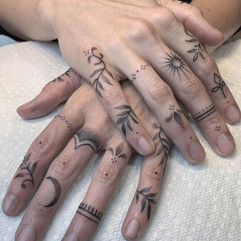


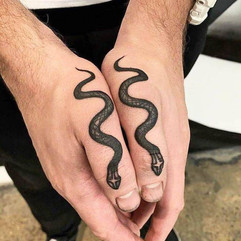














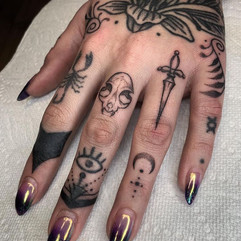





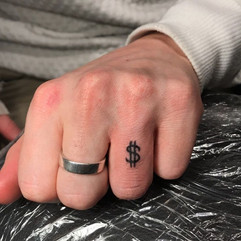






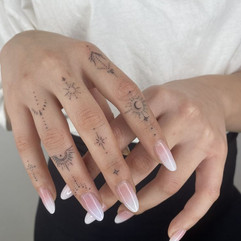


Side of Finger Tattoos
Side of finger placements are the most popular location for women's finger tattoos because they offer the best visibility while maintaining elegance. When you look at your hands naturally, side tattoos are clearly visible without being overwhelming.
Advantages of side finger placement:
Highly visible when looking at your own hands
Visible to others during conversations and gestures
Slightly more skin surface than finger tops
Can accommodate slightly more detailed designs
Less prone to extreme fading than inner finger tattoos
Disadvantages:
Still fades faster than most body locations
Painful due to thin skin and proximity to bone
May blur if design is too detailed
Visible in professional settings (harder to hide)
Best designs for side of finger:
Single words running vertically along finger
Small symbols (hearts, stars, arrows)
Thin line designs
Minimalist icons
Simple geometric shapes
Cost range: $50-$200 per finger depending on design complexity
Top of Finger Designs
Top of finger tattoos sit on the flat surface of your finger between the knuckles. This placement offers slightly more canvas space than sides, allowing for marginally more detailed designs.
Advantages of top finger placement:
More surface area for design
Visible when hands are resting palm-down
Can accommodate small detailed designs better than sides
Creates elegant aesthetic when multiple fingers are tattooed
Disadvantages:
Less visible to yourself (you see the tops less frequently)
High friction area (constant contact with objects)
Fades very quickly due to constant use
Painful placement with many nerve endings
Best designs for top of finger:
Small florals (roses, daisies, lotus)
Geometric patterns
Tiny animals or insects
Celestial symbols (moons, stars, suns)
Miniature nature scenes
Cost range: $75-$250 depending on detail level
Inner Finger Tattoos
Inner finger tattoos are placed on the inside surfaces of your fingers, typically visible when you open your hand or look at your palm. These are the most discreet finger tattoo placement.
Advantages of inner finger placement:
Most discreet option (hidden when hand is closed)
Easy to hide in professional settings
Intimate and personal (only visible when you choose to show)
Perfect for private messages or symbols
Disadvantages:
Fades extremely fast (fastest fading of all finger placements)
Constant friction from gripping objects
May disappear almost completely within 6-12 months
Requires very frequent touch-ups
Limited design options due to curved surface
Best designs for inner finger:
Single letters or initials
Tiny symbols (dots, small hearts, asterisks)
Matching tattoos with partners (visible when holding hands)
Personal reminders meant primarily for yourself
Cost range: $50-$150 (but factor in frequent touch-up costs)
Realistic expectation: Inner finger tattoos often fade to 50% visibility within the first year and may require touch-ups every 6-12 months to maintain any visibility at all.
Multiple Finger Combinations
Many women choose to tattoo multiple fingers, creating cohesive designs or collections of meaningful symbols. This approach allows for creative storytelling and visual impact.
Popular multiple finger tattoo combinations:
Phrase across fingers: Words or phrases split across multiple fingers, readable when fingers are held together. Examples include "SELF LOVE" across four fingers, "STAY STRONG" across two hands, or "FEARLESS" across one hand.
Matching symbols: Same symbol on multiple fingers, creating repetition and visual rhythm. Examples include small hearts on each finger, stars across knuckles, or tiny moons on each ring finger.
Progressive designs: Designs that build or progress across fingers, telling a visual story. Examples include moon phases across four fingers, flowers in different bloom stages, or geometric patterns that connect.
Themed collections: Different but related symbols on each finger representing a cohesive theme. Examples include celestial collection (sun, moon, stars, planets), nature collection (leaf, flower, bee, butterfly), or spiritual symbols (om, lotus, mandala, hamsa).
Knuckle tattoos: Letters or symbols across the knuckles of one or both hands. Classic examples include "LOVE" and "HATE" (though this is quite bold), initials of loved ones, or meaningful acronyms.
Cost for multiple finger tattoos: $200-$800 depending on number of fingers and design complexity. Many artists offer package pricing for multiple fingers done in one session.
Finger Tattoo Costs and Time Investment
Understanding the full financial commitment of finger tattoos helps you budget appropriately and avoid surprises. Remember that finger tattoos require more frequent touch-ups than other placements, so factor in long-term maintenance costs. Additional costs to consider:
Consultation fee: $0-$50 (many artists waive this for small tattoos)
Touch-up costs: $50-$150 per session (every 1-3 years)
Tip: 15-20% of total cost (industry standard)
Aftercare products: $15-$30 for specialized finger tattoo aftercare
Time investment:
Single finger tattoo: 15-30 minutes
Multiple finger tattoos: 45-90 minutes
Detailed designs: Up to 2 hours
Long-term financial reality: A finger tattoo that initially costs $100 may require touch-ups costing $75 every 2 years. Over 10 years, your total investment could be $375-$475. Factor this into your decision-making process.
Choosing the Right Artist for Finger Tattoos

Not all tattoo artists excel at finger tattoos. This specialized placement requires specific skills and experience to execute properly.
What to Look for in a Finger Tattoo Artist
Experience with finger tattoos specifically: Ask to see healed photos of finger tattoos they've done. Fresh tattoos always look good—healed photos show how the artist's work ages on fingers. Look for artists who regularly tattoo fingers and understand the unique challenges.
Fine line expertise: Finger tattoos require precise, clean line work. Artists who specialize in fine line and minimalist tattoos typically produce better finger tattoo results than artists who primarily do large, bold pieces.
Realistic expectations: Good artists will be honest about finger tattoo limitations. If an artist promises your finger tattoo will look perfect forever, they're either inexperienced or dishonest. Trustworthy artists explain fading, touch-up needs, and design limitations upfront.
Portfolio quality: Examine their portfolio specifically for:
Clean, crisp lines in small designs
Consistent line weight
Proper spacing in lettering
Healed photos showing longevity
Variety of finger tattoo styles
Questions to Ask Your Artist
Before committing to a finger tattoo, ask these essential questions:
How many finger tattoos have you done? Look for artists with extensive finger tattoo experience (50+ finger tattoos completed).
Can I see healed photos of your finger tattoos? This is crucial—healed photos reveal how the artist's work ages on fingers.
What's your touch-up policy for finger tattoos? Many artists offer free or discounted first touch-ups within 6-12 months.
Will this design work on fingers, or should we modify it? Good artists will suggest modifications to ensure your design translates well to small finger spaces.
What's the realistic lifespan before I need a touch-up? Honest artists will give you realistic timelines (typically 1-3 years).
What aftercare do you recommend specifically for finger tattoos? Finger aftercare differs from other placements due to constant hand use.
Have you refused finger tattoo requests? Why? Artists who've turned down inappropriate designs show good judgment and ethics.
Red Flags to Avoid
Warning signs that should make you choose a different artist:
No healed finger tattoo photos in their portfolio
Promises that finger tattoos won't fade
Willing to tattoo overly complex designs on fingers
Doesn't ask about your lifestyle or hand use
Significantly cheaper than other local artists
Dismissive when you ask questions
Dirty or disorganized shop environment
No clear touch-up policy
Pressures you to get tattooed immediately
Aftercare for Finger Tattoos
Finger tattoo aftercare is more challenging than other placements because you use your hands constantly. Proper aftercare significantly impacts how well your tattoo heals and how long it lasts before needing touch-ups.
First 24 Hours—Critical Initial Care
Immediate post-tattoo care:
Your artist will bandage your finger immediately after tattooing. Leave this bandage on for 2-4 hours as directed. If they use Saniderm or Tegaderm (second skin), follow their specific instructions—this may stay on for 3-5 days.
First wash (within 4 hours):
Wash your hands thoroughly with antibacterial soap first
Gently remove the bandage (do this over a sink)
Rinse the tattoo with lukewarm water (never hot)
Apply a tiny amount of fragrance-free antibacterial soap
Gently clean with your other hand's fingertips
Rinse thoroughly until all soap is removed
Pat dry with a clean paper towel (not cloth)
Let air dry for 10 minutes
Apply a very thin layer of recommended ointment
The finger tattoo challenge: You'll need to wash your hands frequently throughout the day, which means repeatedly cleaning and re-moisturizing your tattoo. This is unavoidable but manageable with diligence.
Days 2-14—The Healing Phase
Daily care routine for finger tattoos:
Morning:
Gently wash with fragrance-free soap
Pat dry completely
Apply thin layer of fragrance-free lotion
Avoid wearing tight rings over the tattoo
Throughout the day:
Wash hands as needed (you can't avoid this)
Reapply thin layer of lotion after each hand washing
Avoid submerging in water (no swimming, long baths)
Wear gloves when doing dishes or cleaning
Evening:
Wash gently before bed
Apply lotion
Consider wearing a clean cotton glove overnight (optional but helpful)
What to expect during healing:
Days 2-4: Tattoo feels tight and slightly itchy. Skin begins to flake. Colors may look dull. This is normal—don't pick at flaking skin.
Days 5-7: Heavy peeling occurs. Tattoo looks patchy and faded. This is temporary and terrifying but normal. Large flakes of skin come off. Resist the urge to peel them manually.
Days 8-14: Most peeling complete. True colors begin to show. Some areas may appear lighter than others. Continue moisturizing regularly.
Activities to Avoid During Healing
For the first 2 weeks, avoid:
Swimming (pools, oceans, lakes)
Soaking hands in water (long baths, hot tubs)
Excessive hand washing beyond normal hygiene
Wearing tight rings over the tattoo
Applying hand sanitizer directly on the tattoo
Picking or scratching at scabs
Direct sunlight exposure
Gym equipment that requires gripping
Gardening or manual labor without gloves
The reality check: Finger tattoos are difficult to heal properly because you can't avoid using your hands. Do your best to follow aftercare instructions, but understand that some fading during healing is inevitable and normal.
Touch-Ups and Long-Term Maintenance

When You'll Need Your First Touch-Up
Most finger tattoos need their first touch-up within 1-3 years, though some may need attention sooner. Factors affecting how quickly you'll need a touch-up include:
Lifestyle factors:
Frequent hand washing (healthcare workers, food service, parents)
Manual labor or hands-on work
Outdoor activities with sun exposure
Swimming frequency
Use of harsh soaps or chemicals
Biological factors:
Skin type (oily skin tends to push out ink faster)
Age (younger skin regenerates faster)
Immune system (some people's bodies reject ink more aggressively)
Natural skin cell turnover rate
Tattoo factors:
Ink quality used by artist
How deeply ink was placed (too shallow fades fast, too deep can blur)
Design complexity (simple designs hold better than detailed ones)
Color vs. black ink (black typically lasts longer on fingers)
Signs you need a touch-up:
Noticeable fading (tattoo looks lighter than originally)
Blurry lines (edges have spread or lost definition)
Patchy areas (some parts have faded more than others)
Complete disappearance in sections
Overall loss of vibrancy
Touch-Up Costs and Policies
Typical touch-up policies:
Many reputable artists offer free first touch-ups within 6-12 months if you followed proper aftercare. This acknowledges that finger tattoos naturally fade faster than other placements. After the initial free touch-up period, expect to pay for subsequent touch-ups.
Touch-up pricing:
First touch-up (within 6-12 months): Often free with original artist
Subsequent touch-ups: $50-$150 per session
Touch-ups with different artist: $75-$200 (higher because they're unfamiliar with the original work)
Touch-up frequency expectations:
Light lifestyle (office work, minimal hand washing): Every 2-3 years
Moderate lifestyle (average hand use): Every 1-2 years
Heavy lifestyle (frequent washing, manual work): Every 6-12 months
Long-Term Care to Extend Tattoo Life
Daily habits to preserve your finger tattoo:
Sun protection: Apply SPF 50+ sunscreen to your hands daily, even in winter. UV rays are the primary cause of tattoo fading. Reapply after hand washing. Consider UV-protective hand cream for daily use.
Moisturizing: Apply fragrance-free hand lotion 2-3 times daily. Well-moisturized skin holds ink better than dry, cracked skin. Choose lotions without harsh chemicals or strong fragrances.
Gentle products: Use mild, fragrance-free soaps. Avoid antibacterial soaps with harsh chemicals for everyday use (save these for when actually needed). Choose gentle dish soaps and cleaning products, or wear gloves during cleaning.
Protective measures:
Wear gloves during manual work, gardening, or cleaning
Apply hand cream before swimming (creates barrier)
Avoid excessive hand sanitizer use directly on tattoo
Wear rings strategically to protect tattoo from sun when outdoors
Realistic expectations: Even with perfect care, finger tattoos will fade faster than tattoos on other body parts. Accept that touch-ups are part of the commitment, not a sign of failure or poor aftercare.
FAQ—Your Finger Tattoo Questions Answered
1. Do finger tattoos hurt more than other tattoos?
Yes, finger tattoos typically hurt more than tattoos on fleshier areas like the upper arm, thigh, or shoulder. Fingers have thin skin, numerous nerve endings, and bone very close to the surface—all factors that increase pain levels. Most people rate finger tattoo pain at 7-9 out of 10. The sensation is often described as a sharp, burning feeling rather than the duller ache of tattooing areas with more muscle and fat. However, the good news is that most finger tattoos are small and quick, typically taking only 15-30 minutes, which makes even intense pain manageable for most people.
2. How long do finger tattoos last before fading?
Finger tattoos begin showing noticeable fading within 6-12 months for most people, though this varies based on lifestyle, aftercare, and skin type. The skin on fingers regenerates faster than other body areas due to constant use and friction. Every time you wash your hands, type, grip objects, or expose your hands to sunlight, you're causing gradual ink breakdown. Most finger tattoos need their first touch-up within 1-3 years. People with hands-on jobs (healthcare workers, manual laborers, food service) may need touch-ups every 6-12 months, while those with office jobs might extend this to 2-3 years.
3. Can I get a finger tattoo if I work in a professional environment?
This depends entirely on your specific industry and company culture. While tattoo acceptance has increased dramatically, visible hand and finger tattoos remain controversial in conservative industries like law, finance, corporate banking, and healthcare administration. Before getting a finger tattoo, research your company's specific appearance policies and consider your long-term career goals. If you're unsure, strategies include choosing inner finger placements that are less visible, wearing statement rings that cover the tattoo, or opting for skin-tone ink (though this fades even faster). Creative industries, tech companies, and casual work environments are generally more accepting of finger tattoos.
4. How much does a finger tattoo cost?
Finger tattoo costs vary based on design complexity, artist experience, and geographic location. Simple designs (small symbols, single letters) typically cost $50-$150. Medium complexity designs (small words, detailed symbols) range from $100-$250. Multiple finger tattoos or complex designs cost $200-$500+. Remember to factor in long-term costs: touch-ups every 1-3 years at $50-$150 per session mean your total investment over 10 years could be $300-$800. Also add 15-20% tip for your artist. While finger tattoos seem inexpensive initially, the maintenance costs add up over time.
5. Will my finger tattoo completely disappear?
Most finger tattoos won't completely disappear, but they will fade significantly over time. The degree of fading varies by individual, with some people experiencing 50-70% fading within the first year while others maintain better visibility. Inner finger tattoos fade fastest and may become barely visible within 6-12 months without touch-ups. Side and top finger tattoos typically maintain better visibility but still require regular touch-ups. Black ink generally holds better than colored ink on fingers. With regular touch-ups every 1-3 years, you can maintain your finger tattoo's appearance indefinitely, but without maintenance, it will continue fading.
6. Can I get a finger tattoo as my first tattoo?
Yes, but consider carefully whether it's the right choice. Finger tattoos offer advantages for first-timers: they're small, quick (15-30 minutes), relatively inexpensive ($50-$200), and allow you to test your commitment to body art. However, they also have significant disadvantages: higher pain levels, faster fading requiring frequent touch-ups, and high visibility that may impact professional opportunities. If you're considering a finger tattoo as your first, ask yourself: Am I prepared for regular touch-ups? Will this affect my career? Can I handle the pain? Am I choosing this placement because I genuinely want it, or because it seems trendy? Many tattoo artists recommend starting with a less visible, easier-to-maintain placement for your first tattoo.
7. What's the best finger tattoo design for beginners?
For first-time finger tattoos, choose simple, timeless designs with clean lines that will age well and maintain meaning over time. Best options include: small symbols (hearts, stars, moons, arrows), single meaningful words (3-6 letters), simple geometric shapes (triangles, circles, lines), or minimalist icons. Avoid overly detailed designs, complex patterns, or trendy phrases that may feel dated later. Black ink holds better than color on fingers. Side of finger placements typically work better than inner finger for visibility and longevity. Choose designs with personal meaning rather than purely aesthetic appeal—you'll see this tattoo constantly, so it should resonate deeply.
8. How do I care for a finger tattoo while washing my hands frequently?
Frequent hand washing is unavoidable but manageable with proper technique. Use lukewarm water (never hot) and fragrance-free, gentle soap. Wash your hands normally but avoid excessive scrubbing directly on the tattoo. Pat dry gently with clean paper towels rather than rubbing vigorously. Immediately reapply a thin layer of fragrance-free lotion after each hand washing to keep the tattoo moisturized. During the first 2 weeks of healing, this routine is crucial. Consider keeping travel-size lotion in your bag, at your desk, and in your bathroom for easy reapplication. If you work in healthcare or food service requiring frequent washing, expect faster fading and more frequent touch-up needs.
9. Can I cover up or remove a finger tattoo if I regret it?
Finger tattoos are challenging to cover up due to limited space and the fact that cover-ups require darker, larger designs than the original. Small finger tattoos can sometimes be covered with slightly larger designs, but options are limited. Laser removal is possible but expensive ($200-$500 per session, typically requiring 5-10 sessions for complete removal) and painful. Finger tattoos often require more laser sessions than other placements due to the thin skin and proximity to bone. The best approach is prevention: choose your design carefully, sit with the idea for several months, and ensure it has lasting personal meaning. If you're unsure, start with temporary tattoos or henna to test the design and placement before committing permanently.
10. Are finger tattoos safe? What are the risks?
When done by licensed professionals in clean, reputable studios, finger tattoos are generally safe. However, they carry the same risks as any tattoo: infection (if aftercare isn't followed properly), allergic reactions to ink (rare but possible), and bloodborne diseases (extremely rare with proper sterilization). Finger-specific risks include: higher rejection rate (some people's immune systems push out finger tattoo ink more aggressively), nerve damage if done improperly (choose experienced artists), and potential impact on hand function if infection occurs (follow aftercare religiously). To minimize risks: research your artist thoroughly, ensure they use single-use needles opened in front of you, verify the shop is licensed and clean, follow all aftercare instructions precisely, and watch for warning signs like excessive swelling, pus, red streaks, or fever.
11. Can I get a finger tattoo if I have small hands?
Yes, finger tattoos work beautifully on small hands and can actually be more proportionate on smaller fingers. However, design considerations are important: choose simpler designs with fewer details (intricate patterns won't translate well to very small spaces), opt for single symbols rather than complex compositions, consider vertical text along finger sides rather than horizontal across fingers, and work with an artist experienced in scaling designs for different hand sizes. Small hands may actually be advantageous for finger tattoos because the designs remain more delicate and feminine. Discuss your hand size with your artist during consultation—they can adjust designs to work perfectly with your proportions.
12. What's the difference between getting one finger tattooed vs. multiple fingers?
Single finger tattoos offer simplicity, lower cost ($50-$200), easier healing management, and the ability to test your commitment before adding more. They're perfect for meaningful symbols or words that stand alone. Multiple finger tattoos create visual impact, allow for phrase completion across fingers, tell more complex stories, and create cohesive collections. However, they cost more ($200-$500+), require longer sessions (45-90 minutes), involve managing healing on multiple fingers simultaneously, and represent a bigger commitment. Many women start with one finger tattoo and add more over time as they become comfortable with the maintenance and visibility. This approach allows you to assess how the first tattoo ages and whether you're happy with the commitment before expanding.
13. Will my finger tattoo blur or spread over time?
Yes, some blurring is inevitable with finger tattoos due to the nature of finger skin. The thin skin, constant movement, and high cell turnover cause ink to gradually spread slightly over years. This is why experienced artists recommend simple designs with clean lines and adequate spacing—overly detailed or intricate designs will blur together and become unreadable faster. Black ink typically maintains definition better than colored ink. Proper aftercare and regular touch-ups help maintain clarity. Designs with very fine lines (under 1mm) are most susceptible to blurring. To minimize blurring: choose bold, simple designs, maintain proper spacing between elements, protect from sun exposure, keep skin moisturized, and get touch-ups when you notice definition loss (typically every 1-3 years).
14. Can I swim or exercise after getting a finger tattoo?
Avoid swimming for at least 2-3 weeks after getting a finger tattoo. Pools contain chlorine that can fade ink and increase infection risk, while oceans and lakes contain bacteria that can cause infections. Hot tubs are particularly risky due to bacteria in warm water. For exercise, avoid activities requiring gripping equipment (weightlifting, rock climbing, cycling) for the first week. Sweating is generally okay, but wash your hands gently and reapply lotion immediately after workouts. Yoga and running are fine as long as you're not gripping equipment. After the initial 2-3 week healing period, you can resume all activities, but remember that frequent swimming and sun exposure will accelerate fading, requiring more frequent touch-ups.
15. What should I do if my finger tattoo gets infected?
Signs of infection include: excessive swelling that worsens after 48 hours, pus or green/yellow discharge, red streaks extending from the tattoo, increasing pain rather than decreasing, fever or chills, and foul odor from the tattoo. If you notice any of these symptoms, seek medical attention immediately—finger infections can be serious due to proximity to tendons and bones. For mild irritation (redness, slight swelling without other symptoms), increase cleaning frequency to 3-4 times daily, apply antibiotic ointment as directed by your doctor, avoid touching the tattoo unnecessarily, and contact your tattoo artist for advice. Prevention is key: follow aftercare instructions precisely, keep hands clean, avoid submerging in water, and don't pick at scabs or peeling skin.
References
See More: ⤵
Nipple Tattoos: A Comprehensive Guide to Areola Reconstruction and Decorative Designs
Hip Tattoos: The Ultimate Guide to Choosing and Caring for Your Sexy Hip Ink
Divergent Tattoos: A Comprehensive Guide to Choosing, Placing, and Caring for Your Ink
Forearm Tattoos for Women: Styles, Inspiration, and Considerations
Sleeve Tattoos for Men: The Ultimate Guide to Designing and Rocking Your Ink
Best Friend Tattoos: Celebrating the Unbreakable Bond of Friendship
Wave Tattoo: Unleashing the Power and Beauty of the Ocean on Your Skin
Wrist Tattoos: Meaningful Designs and Ideas for Your Next Ink
Halloween Tattoos: Spooky and Creative Ideas for Ink Enthusiasts
Japanese Tattoo: Exploring the Rich History and Symbolism of Irezumi
Infinity Tattoo Ideas: Endless Inspiration for Your Next Ink
Cat Tattoos: Meanings, Designs, and Ideas for Feline-Inspired Ink
Feather Tattoo: Meanings, Designs, and Ideas for Your Next Ink
Lotus Flower Tattoo: Meanings, Designs, and Ideas for Your Next Ink
Polynesian Tattoo: Unraveling the Meanings and Traditions Behind the Ancient Art
Birth Flower Tattoos: Celebrating Your Birthday with Floral Ink
Forearm Tattoos for Women: Embracing Femininity and Self-Expression
Head Tattoos for Guys: Bold Designs and Crucial Considerations
Forearm Tattoos: Unleashing Your Personal Style on Skin Canvas
Arm Tattoos: Your Ultimate Guide to Inked Sleeves and Beyond
Phoenix Tattoo: Rising from the Ashes with Stunning Design Ideas
Heart Tattoo: Meanings, Designs, and Ideas for Your Next Ink


Comments