
Geometric Tattoos: Designs, Meanings, and Inspiration

Updated: 6 days ago
Geometric tattoos have surged in popularity, appealing to those who appreciate modern aesthetics, mathematical precision, and abstract symbolism. Built from circles, triangles, polygons, and sacred geometry, these designs blend ancient spiritual meaning with contemporary style. This guide covers the meaning, designs, placements, cost, and aftercare of geometric tattoos.
Table of Contents
1. What Does a Geometric Tattoo Mean?

A geometric tattoo uses shapes, lines, and mathematical patterns to build a design that feels balanced and intentional. The style draws from both ancient symbolism and modern aesthetics — and it can be as minimal as a single triangle on the wrist or as layered as a full sleeve of interlocking patterns. (Source: IGLA Tattoo)
Geometric tattoos symbolize a wide range of concepts, including stability, order, unity, growth, and the interconnectedness of life. Each shape carries its own meaning, making every design deeply personal.
Meaning | What It Represents |
Order & balance | The harmony of mathematical precision |
Unity & wholeness | The circle and the mandala |
Stability & foundation | The square and the triangle |
Spirituality | Sacred geometry and ancient traditions |
Interconnectedness | The links between all things |
Personal growth | Lines and shapes evolving into form |
2. Shape by Shape: The Symbolism of Geometric Tattoos

Each shape in a geometric tattoo carries its own symbolism. (Source: Monolith Studio)
Shape | Meaning |
Circle | Wholeness, eternity, the infinite cycle of life |
Triangle | Strength, stability, the sacred trinity |
Square | Stability, foundation, the four elements |
Line | Direction, connection, the path of life |
Hexagon | Harmony, balance, nature's efficiency |
Dotwork / dots | Patience, precision, the building blocks of existence |
Circles are perhaps the most fundamental shape, representing wholeness, unity, eternity, and the cyclical nature of existence — the endless cycle of life and death through which we all travel. (Source: Certified Tattoo Studios)
Triangles represent strength, stability, and the sacred trinity depending on orientation. An upward-pointing triangle often symbolizes aspiration and masculinity, while a downward-pointing one represents grounding and femininity.
Squares symbolize stability, foundation, and the four elements of nature — earth, air, fire, and water. (Source: Omnia Tattoo)
3. Sacred Geometry Tattoos

Sacred geometry is the branch of geometric tattooing based on forms considered sacred in various spiritual and philosophical traditions — the Flower of Life, the Metatron's Cube, the Sri Yantra, and the Fibonacci spiral. (Source: Monolith Studio)
Symbol | Meaning |
Flower of Life | The fabric of creation, interconnectedness |
Metatron's Cube | Divine protection, harmony, balance |
Sri Yantra | Spiritual enlightenment, cosmic unity |
Fibonacci spiral | Natural growth, the golden ratio |
Mandala | Wholeness, the universe, inner peace |
Platonic solids | The building blocks of reality |
Mandalas — the Sanskrit word for "circle" — represent wholeness, eternity, balance, and perfection first and foremost. They evoke a sense of calm and inner peace, making them one of the most popular sacred geometry tattoo choices. (Source: Tattoo Journal via Sentidos)
The Flower of Life is a pattern of overlapping circles believed to represent the fabric of creation itself, while Metatron's Cube is associated with divine protection and harmony. The Fibonacci spiral reflects natural growth and the golden ratio found throughout nature.
4. Popular Geometric Tattoo Styles

Geometric tattoos come in a wide range of styles, each with a different aesthetic and symbolic emphasis.
Style | Description | Best For |
Minimalist | Clean, simple shapes | Small, discreet designs |
Sacred geometry | Spiritual patterns (mandala, Flower of Life) | Meaningful, symbolic pieces |
3D / optical illusion | Depth and dimension tricks | Bold, statement designs |
Dotwork | Patterns built from tiny dots | Intricate, detailed pieces |
Polygon / low-poly | Faceted shapes forming figures | Animal and portrait designs |
Linework | Thin, precise lines | Elegant, modern designs |
Blackwork | Solid black shapes and shading | High-contrast, bold pieces |
Minimalist geometric tattoos use clean, simple shapes and are ideal for those who prefer subtlety. 3D geometric tattoos play with depth and optical illusions to create striking, dimension-defying designs.
Polygon or low-poly tattoos use faceted shapes to form figures — from animals to portraits — creating a modern, digital aesthetic. Dotwork builds intricate patterns from countless tiny dots, perfect for sacred geometry and mandala designs. (Source: TattooSmart)
5. Best Placements for Geometric Tattoos


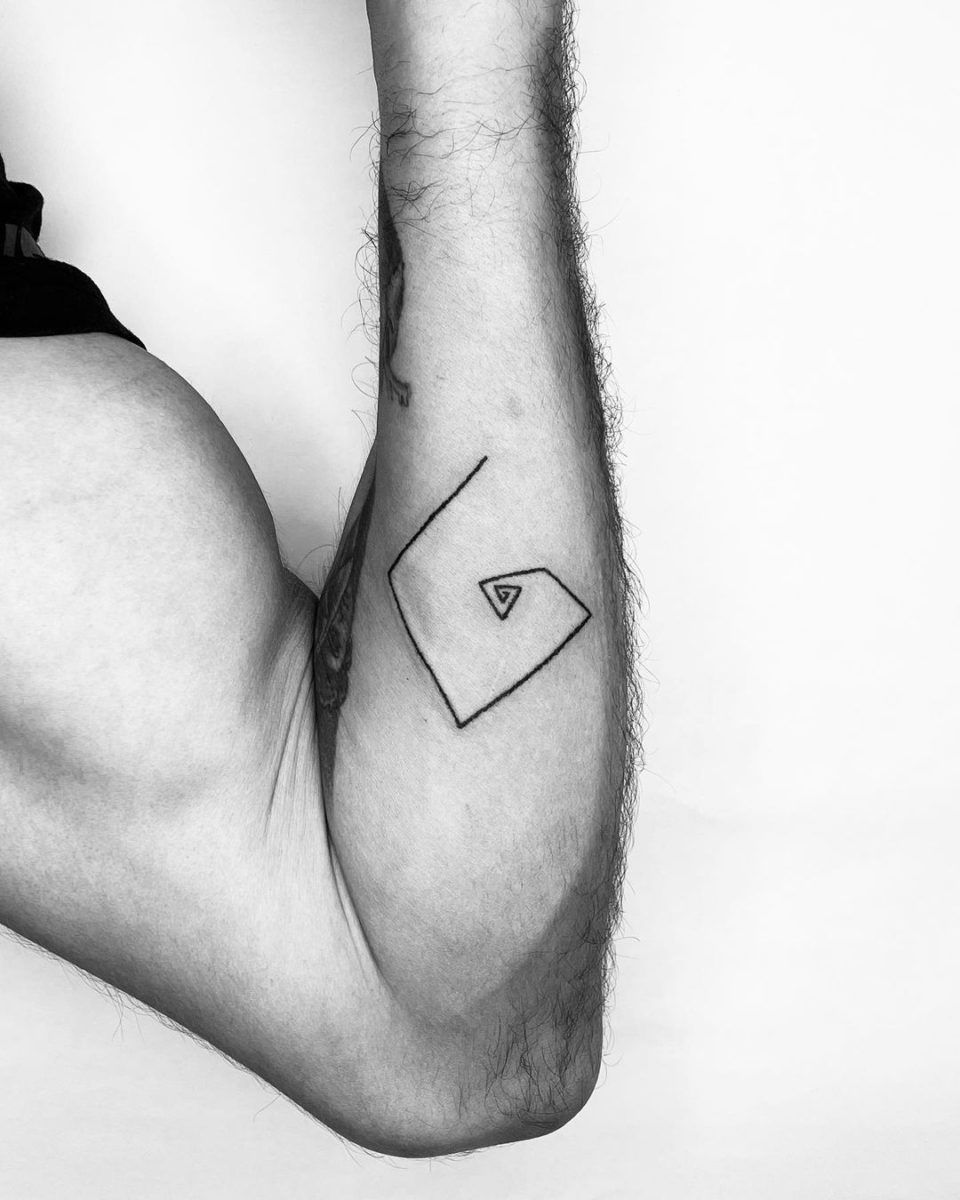


Placement affects both visibility and how the tattoo ages over time.
Placement | Best For | Pain (1–10) |
Forearm | Medium, visible designs | 3–4 |
Wrist | Small, minimal designs | 4–5 |
Upper arm | Versatile, medium pieces | 3–4 |
Back | Large, symmetrical scenes | 4–5 |
Chest / sternum | Symmetrical, centered designs | 5–6 |
Shoulder blade | Circular designs (mandalas) | 4–5 |
Thigh | Large, personal designs | 4–5 |
Ribs / side | Vertical, dramatic designs | 8–9 |
Hand / fingers | Small, bold statements | 7–8 |
Behind the ear / neck | Tiny, discreet | 6–7 |
Forearm and upper arm placements are among the most popular, offering good visibility and a relatively flat surface ideal for showcasing geometric precision. The back and thigh suit larger, more elaborate symmetrical designs.
Circular designs like mandalas work beautifully on the shoulder blade or chest, where the natural curvature complements the symmetry. For small, minimal designs, the wrist, ankle, and behind the ear offer subtle placement options.
Lifestyle and professional considerations should also factor into your placement decision — if you work where visible tattoos might be frowned upon, opt for a location easily covered by work attire.
6. How Much Does a Geometric Tattoo Cost?

Size | Average Cost |
Small (1–3 inches) | $100–$300 |
Medium (3–6 inches) | $300–$700 |
Large (6+ inches) | $700–$2.000+ |
Full sleeve / back piece | $2.000–$5.000+ |
Most artists charge $150–$300 per hour. Geometric tattoos require precision and patience — intricate dotwork, mandalas, and sacred geometry patterns take significantly longer than standard designs, so budget accordingly. Custom design fees may apply for complex concepts.
7. Geometric Tattoo Aftercare

Proper aftercare is essential to keep your geometric tattoo crisp and its fine lines sharp.
Immediate aftercare (days 1–14):
Keep the tattoo clean and dry; wash gently 2–3 times a day with a gentle, fragrance-free soap (recommended option) and pat dry — never rub.
Apply a healing ointment like Hustle Butter Deluxe or Aquaphor Healing Ointment to keep the skin moisturized and support healing.
Avoid submerging the tattoo in water (no swimming or long baths) and avoid tight clothing that might rub against it.
Long-term:
Sun protection is essential — UV exposure fades the fine linework and precision of geometric designs over time. Use a high-SPF tattoo sunscreen like Mad Rabbit SPF 30 daily once healed.
Moisturize regularly with an unscented lotion like Eucerin Advanced Repair to keep the skin supple and the detail sharp.
Consider touch-ups every few years to keep fine lines and intricate patterns crisp — geometric tattoos with very fine lines may blur slightly over time.
8. Frequently Asked Questions
What does a geometric tattoo mean?
Geometric tattoos symbolize order, balance, unity, stability, and the interconnectedness of life. Each shape carries its own meaning — circles represent wholeness, triangles represent strength, and squares represent stability.
What is sacred geometry?
Sacred geometry refers to geometric forms considered sacred in spiritual and philosophical traditions, such as the Flower of Life, Metatron's Cube, the Sri Yantra, and the Fibonacci spiral.
What does a mandala tattoo mean?
A mandala — Sanskrit for "circle" — represents wholeness, eternity, balance, and inner peace. It's one of the most popular sacred geometry tattoo choices.
Where is the best place for a geometric tattoo?
The forearm, upper arm, and wrist suit small and medium designs; the back, chest, and thigh suit large symmetrical pieces; the shoulder blade is ideal for circular mandala designs.
How much does a geometric tattoo cost?
A small design costs $100–$300, a medium piece $300–$700, a large piece $700–$2.000+, and full sleeves or back pieces $2.000–$5.000+.
Do geometric tattoos age well?
When done by a skilled artist, geometric tattoos age well. However, designs with very fine lines or intricate details may blur slightly over time — regular touch-ups help maintain crispness.
Do geometric tattoos hurt?
Pain depends on placement. The forearm, upper arm, and thigh are comfortable (3–5/10); the ribs, hands, and behind the ear are more sensitive (6–9/10).
Can geometric tattoos be combined with other styles?
Yes — geometric elements blend beautifully with nature imagery, animals, portraits, and abstract designs, adding a modern, structured dimension to any piece.
9. References & Sources
Monolith Studio — "Geometric Tattoo: Designs, Meaning & Styles Guide." Source
Certified Tattoo Studios — "Geometric Tattoos: Bold, Symmetrical Ink Designs." Source
IGLA Tattoo — "Geometric Tattoos and What They Really Mean." Source
TattooSmart — "Perfectly Complex Tattoos: Geometric Style." Source
Omnia Tattoo — "Geometric Tattoos Explained: 8 Mesmerizing Types." Source
About the Author
Leonardo Pereira — founder of Tatuagem Blog, has been researching and writing about tattoo art, symbolism, and aftercare since 2017. This guide was reviewed against design and symbolism sources, and content intent was aligned to real search behavior, verified in August 2026.
Wave Tattoo: Unleashing the Power and Beauty of the Ocean on Your Skin
Wrist Tattoos: Meaningful Designs and Ideas for Your Next Ink
Halloween Tattoos: Spooky and Creative Ideas for Ink Enthusiasts
Japanese Tattoo: Exploring the Rich History and Symbolism of Irezumi
Infinity Tattoo Ideas: Endless Inspiration for Your Next Ink
Cat Tattoos: Meanings, Designs, and Ideas for Feline-Inspired Ink
Feather Tattoo: Meanings, Designs, and Ideas for Your Next Ink
Lotus Flower Tattoo: Meanings, Designs, and Ideas for Your Next Ink
Polynesian Tattoo: Unraveling the Meanings and Traditions Behind the Ancient Art
Birth Flower Tattoos: Celebrating Your Birthday with Floral Ink
Forearm Tattoos for Women: Embracing Femininity and Self-Expression
Head Tattoos for Guys: Bold Designs and Crucial Considerations
Forearm Tattoos: Unleashing Your Personal Style on Skin Canvas
Arm Tattoos: Your Ultimate Guide to Inked Sleeves and Beyond
Phoenix Tattoo: Rising from the Ashes with Stunning Design Ideas
Heart Tattoo: Meanings, Designs, and Ideas for Your Next Ink
Caring for Your Black Rose Tattoo: Essential Tips to Keep the Art Vibrant and Long-lasting
Why Choose a Black Rose Tattoo? Exploring Personal and Aesthetic Reasons

Comments