
Rock and Roll Tattoo: The Ultimate Guide to Music Ink That Actually Stands Out
- Leonardo Pereira

- Apr 28
- 15 min read
Updated: May 14
What are the best rock and roll tattoo ideas?
The best rock and roll tattoo ideas move beyond generic band logos to meaningful imagery connected to your music identity. Top choices include Pink Floyd's prism (iconic, timeless), Led Zeppelin's runes, Metallica's logo, specific album artwork, instrument silhouettes, and music-related symbolism (music notes with intention, speakers, records).
Success depends on choosing designs with artistic longevity, avoiding oversaturated imagery, selecting artists experienced in music tattoos, and placement on visible or stable areas.
Cost: $150-$1,000+ depending on complexity; legendary rock stars' tattoos show investment in custom, detailed work that ages beautifully over decades.
TABLE OF CONTENTS
Why Most Rock and Roll Tattoos Look Cheap in 3 Years (The Brutal Truth)
Band Logos vs Authentic Rock Imagery: The Critical Difference
Pink Floyd, Led Zeppelin, Metallica: Why These Designs Dominate
Legendary Rock Star Tattoos Explained (What They Actually Mean)
Instrument Silhouettes vs Detailed Portraits: Technical Considerations
Placement Strategy: Where Your Rock Tattoo Actually Stands Out
Finding the Artist Who UNDERSTANDS Rock Culture (Not Just Sketching)
Why Most Rock and Roll Tattoos Look Cheap in 3 Years (The Brutal Truth)

Here's what nobody wants to admit: most rock and roll tattoos are terrible.
Not because people don't love rock music. Not because they don't care about their tattoos. But because they treat rock tattoos like they're fun, temporary celebrations of a band they like instead of permanent artistic statements.
They'll get whatever band logo their favorite artist has. They'll book whoever has an opening. They won't think about how the design will age. By year three, the fine lines blur. The colors fade. The design that looked edgy at first now looks like a smudgy mess.
A cheap rock tattoo is immediately recognizable: generic band logo, flat coloring, no artistic vision beyond "I like this band." A good rock tattoo is different. It's personal. It integrates band imagery into something larger—a statement about who you are, not just what you like.
The difference is artist selection, design philosophy, and understanding that a rock tattoo represents a lifetime commitment, not a seasonal fashion statement.
Band Logos vs Authentic Rock Imagery: The Critical Difference

Here's where most people go wrong: they get a band logo thinking that's rock tattoo authenticity.
A band logo—The Rolling Stones' tongue, Metallica's angular M, Guns N' Roses' ornate lettering—is intellectual property. It's recognizable. It communicates which band you like.
But it's also overdone. Thousands of people have the same Rolling Stones logo. The design doesn't age well because it relies on fine detail and color vibrancy. By year five, it looks generic.
Authentic rock imagery goes deeper. It's connected to the band's actual art, philosophy, or cultural impact. It's personal to your relationship with the music, not just surface-level brand recognition.
A Rolling Stones logo tattoo says "I like the Rolling Stones." A custom design integrating Stones-era aesthetics, symbolism connected to their music, or artistic elements inspired by their visual identity says something more meaningful about who you are.
The difference in quality between generic logo and authentic rock imagery is dramatic. One ages poorly. One becomes more iconic over time.
See More: ⤵
The Top Band Logos That Age Well (And The Ones That Don't)

Some band logos are designed well enough to work as tattoos. Others are terrible tattoo candidates.
Logos that AGE WELL:
Pink Floyd's prism (from Dark Side of the Moon) works beautifully because it's geometric. Clean lines, simple shapes, bold colors. A prism tattooed well looks just as striking at year ten as year one. The design is timeless.
Led Zeppelin's runes (their mystical symbols) work because they're ancient imagery integrated into a modern context. They carry meaning beyond "I like Led Zeppelin." They work in black and grey or color. They age well because they're built on solid artistic principles.
Black Sabbath's logo works because it's bold, distinctive, and doesn't rely on fine detail. The angular design translates well to skin.
AC/DC's logo works because it's simple, recognizable, and doesn't fade even if the detail degrades slightly.
Logos that DON'T AGE WELL:
Guns N' Roses elaborate lettering has too much fine detail. The ornate styling blurs as ink settles and ages. By year three, it looks muddy.
Metallica's logo with all its sharp angles and fine lines suffers the same fate. The intricate lettering degrades.
Band logos with gradient shading (trying to create depth) fade dramatically as color transitions blur.
Logos requiring perfect proportions (anything off-center looks obviously wrong) become problematic when the tattoo shifts slightly as your body changes.
The critical distinction: simple, bold, geometrically sound logos age well. Complex, detailed, gradient-heavy logos fade poorly.
Pink Floyd, Led Zeppelin, Metallica: Why These Designs Dominate

These three bands represent the gold standard of rock tattoo imagery. There's a reason.
Pink Floyd's prism is literally a perfect tattoo design. It's the Dark Side of the Moon cover. It's a simple geometric shape (prism) with a bold design (light spectrum). It translates flawlessly to skin. It works in color or black and grey. It never looks dated because it's rooted in timeless visual principles.
A Pink Floyd prism tattoo communicates multiple things: appreciation for Dark Side of the Moon (arguably the greatest rock album), understanding of visual art and geometry, and sophistication beyond "I like rock music."
Led Zeppelin's runes (the band member symbols) work because they're ancient, mysterious, and carry meaning. Each member had a specific rune representing their role. Getting a Zeppelin rune connects you to that specific band member or that band era. The imagery is powerful.
Zeppelin runes work as individual tattoos or integrated into larger designs. They age well because they're built on solid artistic and historical foundation.
Metallica's impact on tattoo culture is massive—they're probably the most-tattooed band in history. Their logo is recognizable globally. But the logo itself isn't the best tattoo design (too much fine detail). What works well are Metallica-inspired designs: skulls with Metallica elements, album artwork, specific songs visualized, stage imagery.
The reason these three bands dominate: their visual identity is strong enough to transcend the original band and become universal rock imagery.
Album Artwork Tattoos: The Hidden Gem Most People Miss

This is where genuinely excellent rock tattoos hide: album artwork.
Instead of getting a band logo, get the actual album art that changed your life. This works exponentially better for multiple reasons:
It's already designed as art. Album artwork is created by professional artists specifically to be visually striking. You're not trying to force a logo onto skin—you're translating existing artwork designed to be beautiful.
It's personal. The album that changed your life is more meaningful than the band name. That specificity makes the tattoo more powerful.
It ages better. Album artwork—especially from classic rock era—is designed with timeless principles. The colors, composition, and artistic approach don't rely on trendy aesthetics.
It differentiates you. Everyone has band logos. Nobody has the same album artwork tattoo because people connect differently to different albums.
Examples that work brilliantly:
Pink Floyd's Dark Side prism (already mentioned) but also the pyramids, Wish You Were Here's burning man, The Wall's brick imagery.
Led Zeppelin's IV album artwork with the old man and the hermit—it's mystical, visually rich, perfect for larger tattoo pieces.
Black Sabbath's album covers—Paranoid especially—work beautifully as detailed black and grey pieces.
David Bowie's Ziggy Stardust cover—the lightning bolt lightning is iconic and works as a standalone tattoo.
The advantage of album artwork: it's already a complete artistic vision. You're not designing around a logo. You're tattooing something already artistically sound.
Legendary Rock Star Tattoos Explained (What They Actually Mean)

Looking at how actual rock musicians tattoo themselves reveals what separates serious rock tattoos from casual ones.
Most legendary rock stars don't get band logos on their bodies. They get meaningful, often abstract, often deeply personal work.
Flea (Red Hot Chili Peppers) has extensive tattoos including Jimi Hendrix portraits (his biggest influence), Japanese imagery, and artistic pieces representing his spiritual journey. None of his tattoos are RHCP logos. His tattoos represent influences and philosophy, not band identity.
Slash (Guns N' Roses) has primarily custom artwork, skulls with artistic intent, and designs representing his musical influences. Not Guns N' Roses logos.
Steven Tyler has extensive tattoos that are largely artistic and spiritual rather than Aerosmith branding.
The pattern: Serious rock musicians don't get their own band's logo. They get work representing their influences, spiritual beliefs, or artistic philosophy. They treat tattoos as personal art statements, not band merchandise.
This reveals the real difference between amateur rock tattoos (generic band logos) and serious rock tattoos (meaningful, personal artwork connected to music and identity).
See More: ⤵
Eyebrow Tattoo: The Definitive Guide for Bold and Beautiful Brows
Forearm Tattoos: Unleashing Your Personal Style on Skin Canvas
Is an Inner Forearm Tattoo Painful? Your Complete Guide to Forearm Tattoo Pain
Butterfly Tattoos for Women in 2024: Embracing Transformation
Discover the Most Sensitive Part of the Body to Get a Tattoo
Nipple Tattoos: A Comprehensive Guide to Areola Reconstruction and Decorative Designs
Hip Tattoos: The Ultimate Guide to Choosing and Caring for Your Sexy Hip Ink
Divergent Tattoos: A Comprehensive Guide to Choosing, Placing, and Caring for Your Ink
Fine Line Tattoos: Everything You Need to Know
Music Symbolism: Meaningful Rock Tattoos Beyond the Logo


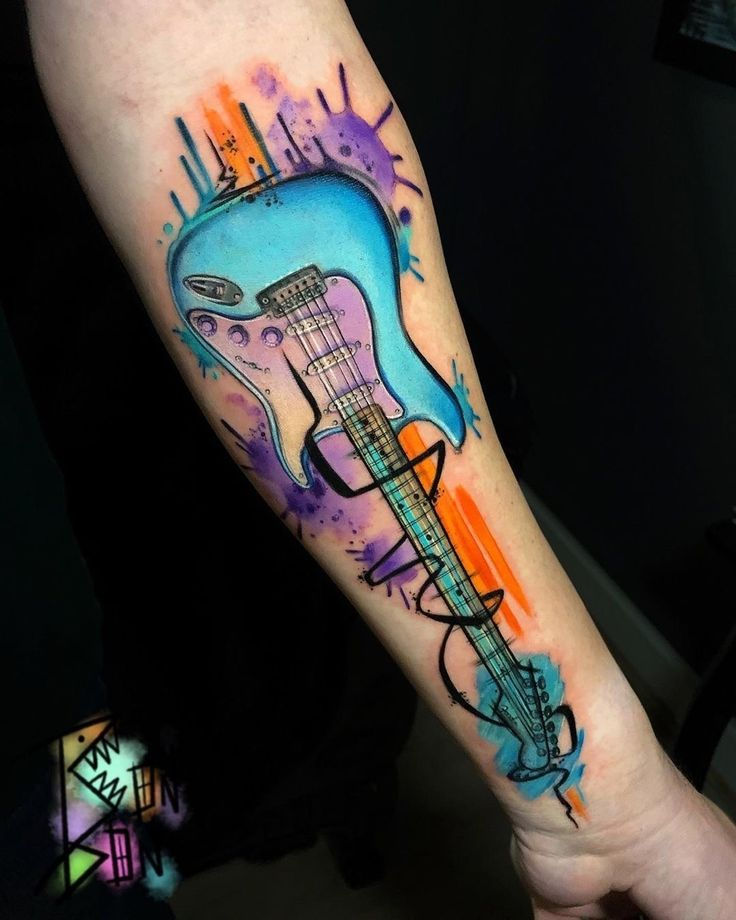


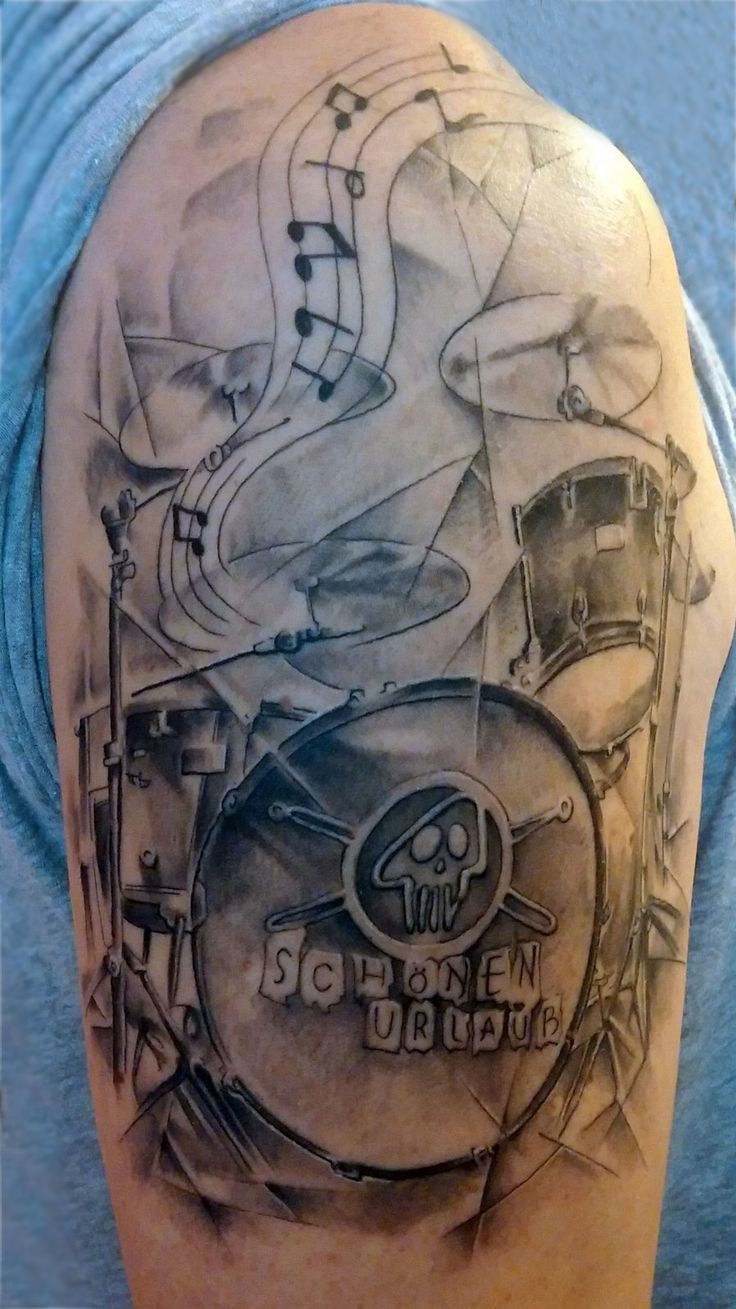


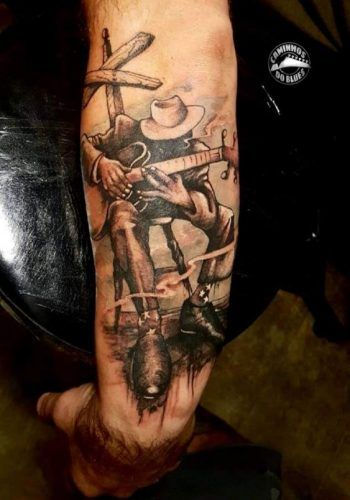


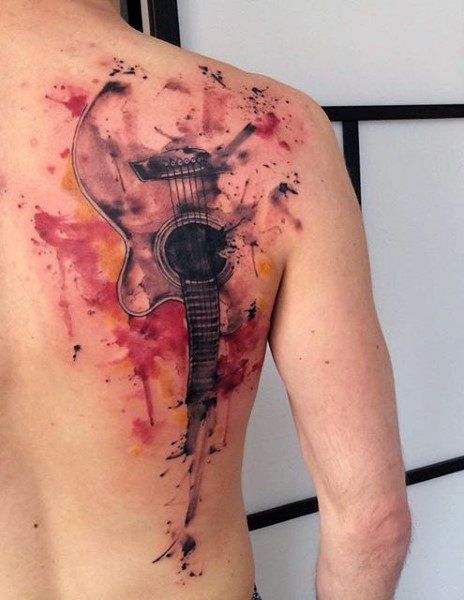
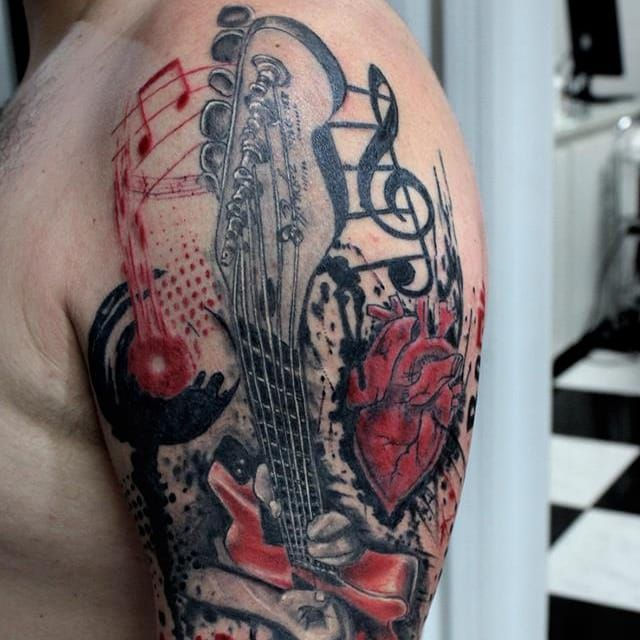


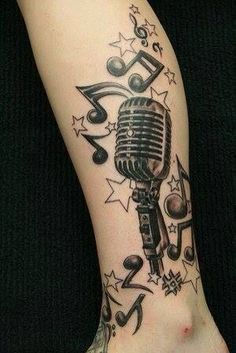


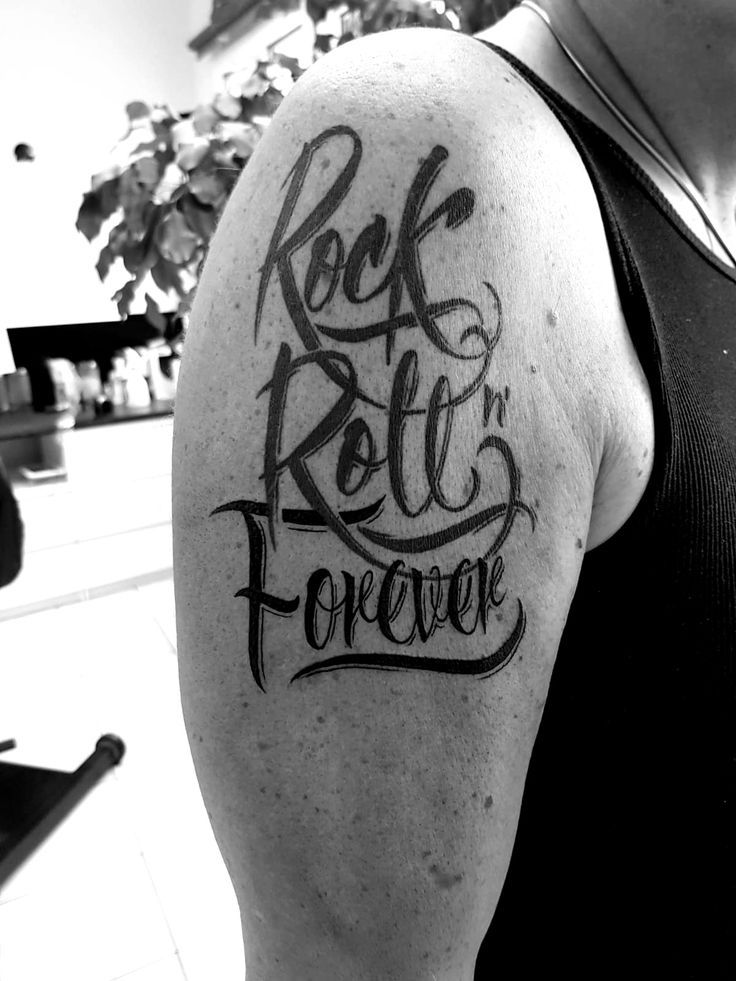


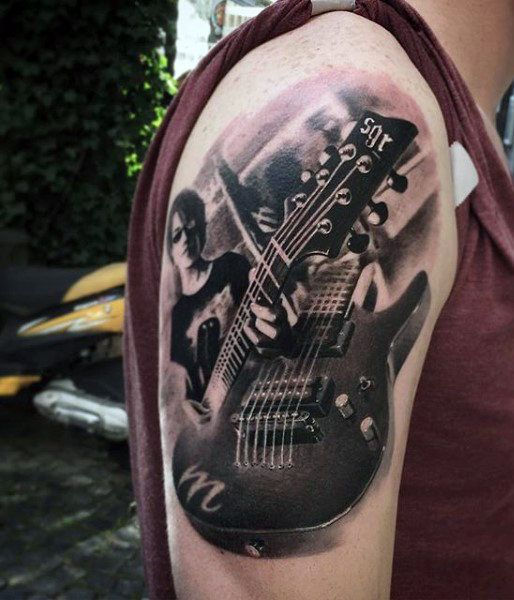


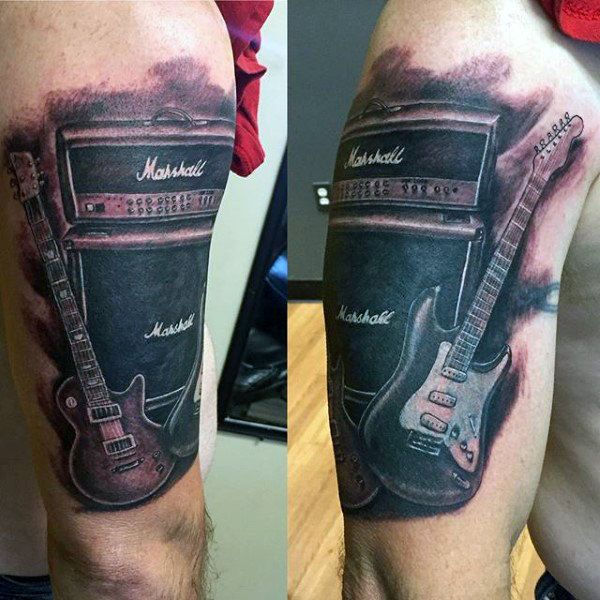


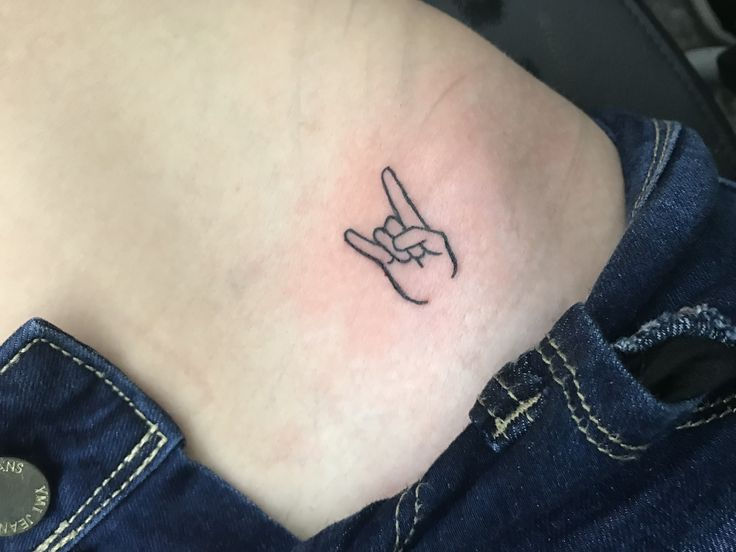
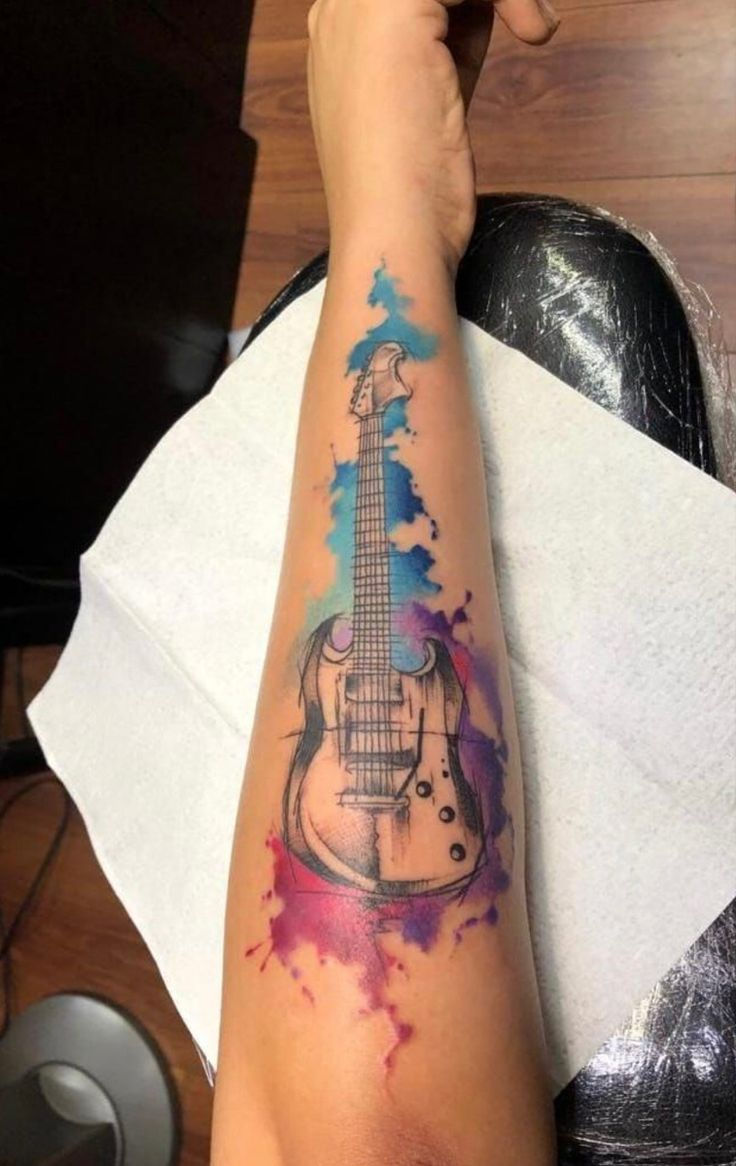


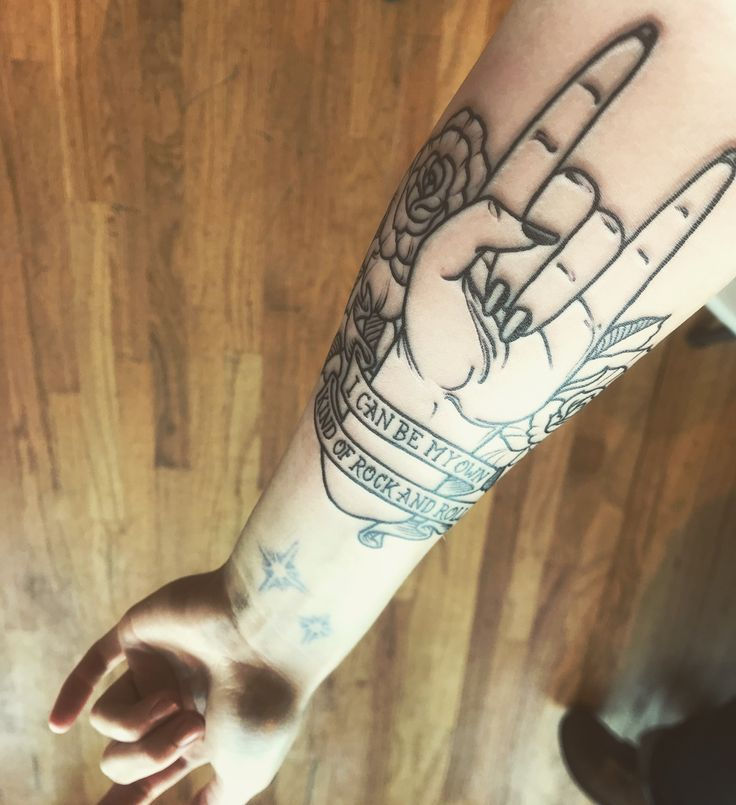


The most powerful rock tattoos use music symbolism meaningfully.
Music notes done generically look cheap. Music notes integrated into larger designs—representing specific songs, flowing as visual elements, designed with intention—become powerful.
Records and vinyl symbolize analog authenticity and classic music. A vinyl record tattooed well becomes a statement about appreciating real music versus digital streaming.
Speakers and amplifiers represent the power of live music, the physical experience of sound. Detailed speaker imagery can be striking.
Microphones symbolize voice, expression, communication. A vintage microphone done in realistic style makes a strong artistic statement.
Instruments as silhouettes (guitar shape, drum sticks, violin profiles) work well when designed with artistic intention. A simple guitar outline is weak. A guitar integrated into landscape, flowing with other elements, becomes powerful.
Devil horns (metal horns) are the obvious metal symbol. Done well—as part of larger composition—they work. Done alone, they're clichéd.
Wings combined with music elements (records with wings, notes with wings) symbolize music's ability to transcend, freedom, elevation through art.
Skulls merged with music elements (skull with headphones, skull in speakers, death metal imagery) work when they're thoughtfully integrated rather than just combining two recognizable symbols.
The key to music symbolism: use symbols as elements within larger design, not standalone representations. A flower with music notes is stronger than just music notes. A landscape with music elements is more powerful than isolated symbols.
Instrument Silhouettes vs Detailed Portraits: Technical Considerations
Two approaches dominate rock instrument tattoos. Each has advantages and disadvantages.
Silhouette approach (simple guitar outline, drum silhouette, violin shape):
Advantages: Clean, recognizable, ages well because it doesn't rely on detail degradation, works at any size, flexible for placement.
Disadvantages: Can look generic if not designed thoughtfully, less visually complex, doesn't showcase artist technical skill.
Detailed portrait approach (realistic guitar with lighting, detailed hands playing drums, classical instruments rendered photorealism):
Advantages: Stunning when executed well, showcases artist technical skill, creates visual impact, more unique to your specific vision.
Disadvantages: Requires artist skill in realism, takes longer sessions, costs more, detail degrades over time requiring touch-ups.
The right choice depends on what you're trying to communicate. If you want a statement about instruments and music, silhouettes work. If you want a portrait-level artistic piece featuring instruments, realistic work is necessary.
Most people underestimate how much detail affects aging. A realistic guitar that looks incredible fresh might look muddy at year five. A silhouette looks essentially the same at year twenty.
Color vs Black & Grey: Which Works Better for Rock Designs
Rock aesthetic has evolved, and tattoo color choices affect how rock designs age.
Black & grey realism dominates rock tattoos because:
Colors don't fade (black ink is the most stable)
Rock aesthetic traditionally works in black and grey (punk, metal, classic rock imagery)
Album artwork often translates better to black and grey
Classic rock imagery doesn't require color vibrancy
Color rock tattoos work for:
Specific album artwork requiring color (some Pink Floyd, David Bowie work)
Modern rock or pop-rock with contemporary aesthetics
Personal color preferences that override traditional rock aesthetic
The honest assessment: black and grey is the safer choice for rock tattoos that need to age beautifully. Color fades. Rock aesthetic—historically—is built on black and grey contrast.
If you love color and want a colored rock tattoo, understand you're committing to touch-ups every 5-10 years. If longevity matters, black and grey is the wiser choice.
Placement Strategy: Where Your Rock Tattoo Actually Stands Out
Placement determines whether your rock tattoo is visible, meaningful, and ages well.
Ideal placements for rock tattoos:
Chest: Visible when you want, hidden in professional settings. Works well for band logos, album artwork, meaningful symbols. Medium-sized designs work best.
Upper back/shoulder blade: Substantial canvas for complex designs. Visible in certain shirts, hidden professionally. Heals well.
Sleeve (arm): High visibility, excellent canvas for rock music narrative. Can integrate multiple elements into cohesive composition. Ages well because arm movement is predictable.
Thigh: Large canvas for substantial artwork. Hidden when needed. Excellent healing area. Perfect for ambitious album artwork or complex designs.
Back piece: Enormous canvas for elaborate rock imagery, album artwork, or multiple elements creating complete narrative. Heals excellently.
Less ideal placements:
Wrist/hand: High visibility but high movement. Detail blurs quickly. Only works for simple, bold designs.
Neck/face: Highly visible, carries specific cultural meaning. Most professional settings problematic. Consider carefully.
Ankle/foot: Friction from shoes, slower healing, detail degrades faster. Not ideal for rock tattoos with detail.
Inner wrist: Movement disrupts healing. Detail becomes problematic. Avoid for anything requiring longevity.
The rule: choose placements that either hide the tattoo (giving you freedom to be ambitious artistically) or showcase it prominently (requiring you to be strategic about design choices).
Finding the Artist Who UNDERSTANDS Rock Culture (Not Just Sketching)
This separates good rock tattoos from great ones. You need an artist who understands rock culture, not just technical tattoo skills.
What to look for:
Portfolio showing actual rock tattoos. Not generic band logos, but thoughtful rock imagery, album artwork, meaningful designs. Can they articulate why specific designs work?
Knowledge of rock history. Can the artist discuss bands, albums, music movements? Do they understand what makes rock visual identity distinctive? Or are they just technically skilled tattooers?
Integration thinking. Do they understand how to integrate rock elements into larger designs rather than just placing logos on skin?
Respect for aging. Do they design specifically considering how the piece will age? Can they explain why certain design choices ensure longevity?
Music knowledge. Have they worked with musicians? Do they understand touring culture, festival aesthetics, DIY punk ethos? Or are they just doing generic rock tattoos?
Red flags:
"We do rock tattoos and everything else equally well"
No portfolio specific to music or rock imagery
Willing to do any design you request without artistic pushback
Can't articulate design philosophy
More interested in upselling size than discussing artistic merit
Green flags:
Specific rock portfolio with strong cohesion
Can discuss why certain designs work for aging
Pushes back on bad ideas
Charges appropriately (not underpricing or overcharging based on "rock" label)
Demonstrates music knowledge
Years of experience specifically with rock and music tattoos
See More: ⤵
Forearm Tattoos for Women: Styles, Inspiration, and Considerations
Sleeve Tattoos for Men: The Ultimate Guide to Designing and Rocking Your Ink
Best Friend Tattoos: Celebrating the Unbreakable Bond of Friendship
Wave Tattoo: Unleashing the Power and Beauty of the Ocean on Your Skin
Wrist Tattoos: Meaningful Designs and Ideas for Your Next Ink
Halloween Tattoos: Spooky and Creative Ideas for Ink Enthusiasts
Japanese Tattoo: Exploring the Rich History and Symbolism of Irezumi
Infinity Tattoo Ideas: Endless Inspiration for Your Next Ink
Cat Tattoos: Meanings, Designs, and Ideas for Feline-Inspired Ink
Feather Tattoo: Meanings, Designs, and Ideas for Your Next Ink
Watercolor Tattoo: Embracing the Beauty of Imperfection
Real Cost Breakdown: Why Good Rock Tattoos Aren't Cheap
Rock tattoos range from $150 to $3,000+ depending on complexity, artist, and design.
Budget rock tattoo: Band logo, simple design, emerging artist: $150-$400.
Solid rock tattoo: Meaningful design, experienced artist, good aging potential: $400-$1,000.
Premium rock tattoo: Album artwork, custom design, accomplished artist: $1,000-$2,000+.
Elite rock tattoo: Large piece, master artist, custom complex design: $2,000-$5,000+.
Why costs vary:
Artist experience (emerging vs master-level), design complexity (simple logo vs intricate album artwork), size (small wrist vs full back), color vs black and grey, session duration.
The painful truth: cheap rock tattoos look cheap. An artist willing to do quality work charges appropriately. If someone's offering amazing rock tattoos at $50, that's a warning sign.
Investing in quality pays off. A $1,000 rock tattoo from an accomplished artist ages beautifully for decades. A $200 cheap tattoo looks regrettable by year three.
FAQ: Rock Tattoo Questions People Actually Ask
Will my rock tattoo look dated if the band loses popularity?
Not if it's designed well. A quality album artwork or meaningful rock imagery transcends current band popularity. Pink Floyd's Dark Side remains iconic decades after peak popularity.
Can I get multiple band tattoos without looking like a walking band logo?
Yes, if you integrate them thoughtfully into a larger narrative rather than scattering logos across your body. A sleeve narrative incorporating multiple influences works. Random logos scattered everywhere looks cheap.
What's the best band logo to get tattooed?
Pink Floyd's prism, Black Sabbath's angular logo, AC/DC's design—logos that are geometrically sound and don't rely on fine detail. Avoid ornate, detailed lettering logos.
Should I get my favorite band's logo or something more subtle?
A thoughtful design inspired by the band works better than the direct logo. You're more likely to love the tattoo years later.
How do I know if a rock tattoo design will age well?
If it relies on fine detail or color vibrancy, it won't age as well. Bold lines, geometric elements, black and grey designs age better than intricate color work.
Can I combine multiple bands into one tattoo?
Yes, if the design integrates them into cohesive composition rather than just combining logos. Thematic integration (all punk bands, all 70s rock, all metal) works better than random mixing.
What if I want album artwork but it's really detailed?
Detailed album artwork can work—it just requires sessions to build the detail properly and commitment to touch-ups if color fades. Discuss with your artist about feasibility.
Final Thoughts: Making Your Rock Tattoo Legendary {#final}
A rock and roll tattoo should be legendary. It should represent something meaningful about who you are, not just what you like.
The difference between amateur and legendary: thoughtfulness. Taking time to choose design, choosing artist wisely, committing to placement and vision rather than impulsive decisions.
The rock icons who have meaningful, powerful tattoos didn't get them randomly. They invested in vision and quality execution. You can too.
A genuinely great rock tattoo becomes part of your identity—a permanent statement about what moves you, what inspires you, what defines your relationship with music.
That's worth getting right.
EXTERNAL REFERENCES & FURTHER RESEARCH
Band & Music Tattoo Research: Loudwire: 19 Rock + Metal Musicians Who Are Also Tattoo Artists – Research on rock musicians' approach to tattoo art
Tattoodo: The Best Rock Star Tattoos Ever – Analysis of legendary musician tattoos and their meanings
Rolling Stone: Your Rock Tattoos - The Good, The Bad and The Ugly – Community examples and expert commentary
Band Logo & Imagery: Adobe Stock: 7,937+ Rock and Roll Tattoo Images – Visual reference database for rock imagery
Pinterest: 53 Best Rock N Roll Tattoo Ideas – Community inspiration and design gallery
BlackInk AI: 847+ Rock And Roll Tattoo Ideas in 2026 – AI-generated design inspiration
Cultural & Technical: Funhouse Tattoo SD: Rock 'N' Roll Tattoos & Culture – Professional artist perspective on music and tattoo culture
Rock Ink 'N Roll Tattoo: Est. 1996 – Professional studio specializing in rock and traditional work
Article Details
Published: April 28, 2026Research Compiled By: TatuagemBlog – Dedicated to meaningful tattoo research and music-inspired body art


See More: ⤵
Lotus Flower Tattoo: Meanings, Designs, and Ideas for Your Next Ink
Polynesian Tattoo: Unraveling the Meanings and Traditions Behind the Ancient Art
Birth Flower Tattoos: Celebrating Your Birthday with Floral Ink
Forearm Tattoos for Women: Embracing Femininity and Self-Expression
Head Tattoos for Guys: Bold Designs and Crucial Considerations
Forearm Tattoos: Unleashing Your Personal Style on Skin Canvas
Arm Tattoos: Your Ultimate Guide to Inked Sleeves and Beyond
Phoenix Tattoo: Rising from the Ashes with Stunning Design Ideas
Heart Tattoo: Meanings, Designs, and Ideas for Your Next Ink
Comments